If you’re looking to be depressed, see this early research from Business Insider on the social implications of GLP-1 usage and how it may impact relationships in the home and workplace.
Reading
Dan Hon made me laugh with “carbon-based chauvinism.”
I found this piece from an anthology celebrating 50 years of women’s studies, which explores the intersection of scholarship and publishing practices over time.
Among other disappointing SCOTUS announcements today: Supreme Court Rejects Lawsuit Alleging Roundup Weedkiller Caused Cancer. In a previous life, I worked in the same college as a cancer researcher who developed twenty years of conclusive research that Roundup causes cancer in dogs by studying Scottish terriers. Scotties, it turns out, tend to be susceptible to bladder cancer, and thus make good candidates for related research when cancer is present. For several years, I got to witness a veritable army of Scottie dogs dressed in bowties and plaid jovially trotting in and out of our veterinary research hospital to seed her research during their cancer treatments in West Lafayette.
What I learned during that time is that a great deal of veterinary research is about looking for health patterns across species. While not all carcinogens act identically across species, most known cancer-causing agents affect both dogs and people in similar ways. Because dogs share our homes and have similar biological responses to toxins, scientists track canine cancers as an early-warning system for human health risks and to research viable interventions to treat them.
In any case, while I don’t know the ins and outs of the specific laws in play here, this is a disappointing outcome when it comes to the science.
“How internet misogyny parallels ‘real-world’ harassment” is a 2007 paper in the Yale Journal of Law and Feminism by my old co-blogger, Jill, on her experience being harassed online by peers she knew IRL. Many parallels to current attitudes, all enabled and accelerated by digital networks and tools.
There are enough common signs of AI writing now that the subject has its own Wikipedia page. Via John Gallagher’s latest on “template rhetoric.”
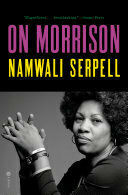
Read this alongside The Bluest Eye. Finished reading: On Morrison by Namwali Serpell 📚

A quarter of the way in and already exhausted/confounded. Currently reading: Adult Braces by Lindy West 📚
I’m seeing grunge icons L7 in concert with Amyl and the Sniffers this summer and have been reading a lot about the ’90s indie rock era in the meantime. One frame I keep encountering positions grunge as regional punk musicians navigating a global, corporate pop mainstream – awkward, crass and vulgar, but in the big leagues all the same. Reading the Auf der Maur bio reminded me that a lot of the punk scene was steeped in ideas about social roles and archetypes and oriented around upending them – or at least giving them a healthy challenge. This subculture was also populated by poets and artists in the classical sense. The retro polish around ’90s pop culture has flattened that texture, but it was genuinely a thing.
The era also introduced the woman rock star, introducing women who wrote and performed with full creative authority, not just as muses, groupies or singers. The reception from fans and critics was mixed, and the discourse around Courtney Love in particular was gross and volatile. Most of the positions she was vilified for read as entirely unremarkable today. I was a teenager during all of this, too young to meaningfully participate, but the aesthetic dominated my early adolescence. At the time I loved Tori Amos and PJ Harvey like kids now love Chappell Roan. What I forgot over time is how literary the era was, and how romantic, both in the literary sense and in relation to the New Romantics of the 1980’s. Big culture lessons for a starry-eyed teenager.
L7’s music is not that deep – it’s metal for meatheads, by design – but their politics and presence were. While poking around, I found that L7 was one of four bands featured in the 1995 documentary film Not Bad For a Girl, which was co-produced by Love and Kurt Cobain. The film focused on several all-female indie punk bands and won Best Documentary at the New York Underground Film Festival in 1996. I’ve never heard of it before now. It got middling reviews from critics then, and it’s not available streaming in full in English, unless you’re viewing it here at this dubious Google Drive link – which I will do and report back.
It looks like Wordpress has produced a short-form blogging app that duplicates the model we are trying over here on the even-more-indie web. I might give it a spin.
I’m reading about trends in book and phone bans in American public schools, and reminded that reading novels was once considered an idle and immoral pasttime, just as internet use is today. This 2016 article from JSTOR goes into the history of reading books and the fear that it “enfeebled the mind.”
If folks want quality first-person writing about age and aging, I highly recommend the newsletter magazine Oldster, which explores “the experience of getting older, and what that means at different junctures.” Bonus: Oldster is run by Sari Botton, formerly the longtime essay editor of Longreads.
I missed this 2025 article by Noah Hawley on Vonnegut, war and the atomic bomb, and it is worth the time.
A nostalgic read on how music nerdery bloomed online.
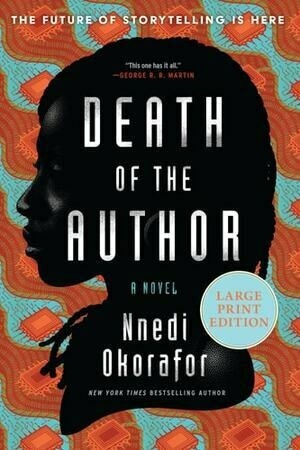
Finished reading: Death of the Author by Nnedi Okorafor 📚
I once worked in a role where I keyed million dollar manufacturing orders into SAP, information that directly fed into factory specs for a manufacturing facility based in another country. Our regional office fed into a massive, global electrical engineering firm that ran on small margins (electricity delivery is a well-trod market), so our ability to deliver accurate orders on time was a differentiator in a field that is otherwise easily interrupted by chip shortages and logistics chains.
It was a big job. I learned a ton about electrical engineering, manufacturing and global logistics from a particular vantage point in North America. Our headquarters were based in Sweden, with locations around the world to support the electrical grid(s), covering both hardware and software solutions. My colleagues and I worked in positions that sat somewhere between B2B customer service, inside sales and data entry, and were expected to maintain a 99.8% accuracy rate because a single fat finger error would cascade across myriad systems, impacting real-world operations to the tune of hundreds of thousands of dollars per error.
Once (and only once), I fat-fingered a serial number during data entry which ruined an entire shipment of widgets. In response, the factory in Mexico sent the incorrect order of widgets, about five pallets, to my location in the United States so I could correct the order by hand. One by one, I had to physically remove each widget from a pallet, then from its individual shipping container, make a correction on the widget itself, and repackage each one, signing my name on each unit to ensure it was corrected by an accountable employee. I can’t recall why the issue couldn’t have been corrected on the factory floor, but it wasn’t on the menu. It was going to stay my problem.
This was the one and only factory error I made in about five years of tenure, precisely because it was so painful to correct it. The process was a little embarrassing but nobody made it especially so. Instead my coworkers up and down the org chart relayed a simple expectation: the desk workers need to pay attention to the details because the alternative is too costly. A few old-timers made sure to razz me about it in good humor, but ultimately the error was mine and the fix was mine, and the experience stuck because the whole chain of responsibility understood the stakes and reinforced the consequences. They also trusted me to stick around and continue to do my best.
During my annual review that year, I was dinged for only having a 98% accuracy rate, and I knew why that was a fair assessment.
I thought about this when I read today’s NYT piece on whether 90% accuracy is good enough for LLMs.
Related-ish: The important legacy of the Sarbanes-Oxley Act.
Pulling from some old communication theory while I am thinking about blogging and the indie web, and especially thinking about Dallas Smythe, who argues that mass media doesn’t produce content but audiences, packaged and sold to advertisers. On social media, users aren’t just the audience being sold, they’re also a labor force co-producing the content that attracts more audience.
Looking back at the feminist blogging era with the benefit of my current experience, I’d argue that what made Feministe different from our peer blogs was the commitment to convening the audience and sharing the platform without packaging it up for or selling to advertisers. That was largely my boundary – with as much market space as it commanded for the time, it was never monetized at scale, though individual contributors were free to use it as they wanted to build their audiences. We eventually committed to a small advertising carousel to cover hosting costs.
I recall someone balking at me for refusing to broadly monetize when I spoke at Blogher in 2005, but it was a hard line, for better or worse.
An observation on feminist writing and Jezebel: Throughout history, a lot of time and energy has been spent mediating how and whether certain kinds of people talk to one another. The feminist blogosphere, for all its faults, was the first time lateral, public, unmediated conversation happened among women at scale. Many kinds of women were there that had no space at other tables. And it was very messy, and very revealing, because it was the first time that happened at scale for all to see.
Some thoughts:
- When I started in 2001, the most viewed website about feminism on the internet was a solo blog by a man in Portland.
- I just pulled Mindy Seu’s “Cyberfeminism Index” off my shelf, a veritable tome, and the feminist sites don’t even make the table of contents. Which is not an indictment of the book, but an example of how ephemeral all this is online.
- You can see this on Twitter in the live debate about what Jezebel was and wasn’t, a conversation happening mostly through collective remembering. Jezebel joined the pack of blogs at some point, and they were big dogs, but they weren’t responsible for the creation or steering of the digital movement. They were a glossy, spendy repackaging of the organic thing, backed by real investors. It’s wild to see the entirety of the movement attributed to Jezebel by young Twitter, given that most of the indies kept Jezebel at arms’ length until much later. They were pretty widely considered a corporate interloper in a grassroots arena, though in hindsight that wasn’t right either.
- The first time the indie bloggers gave Jezebel their day was when they published the untouched photographs of Faith Hill on the cover of Redbook, a women’s magazine. The Redbook post tore the veil off the beauty industry in real time. Until then, the idea that “celebrities are photoshopped” and “photos are retouched” was almost an urban myth, which is easy to forget given the ubiquity of filters and AI now. Then, you heard about it but couldn’t confirm it for yourself unless you had firsthand experience. Retouching was a discrete industry practice, digital tools were still expensive and clunky, and all of it was surrounded by a lot of tradecraft and secrecy. The mystery of celebrity image management exploded with an animated gif on a public-facing post, and it was rad.
I’m watching the feminist writer scene go hard on some recent books: Jamilah Lemieux’s Black. Single. Mother. and Lindy West’s Adult Braces.
Both books were published on March 10, and both authors are talented, with impressive bylines, with significant followings baked in. Incidentally, they come from the same cohort we loosely refer to as “feminist blogging,” though both would probably bristle at the description. And both use autoethnographic methods to leverage their personal lives to tell bigger stories about social, cultural and economic dynamics (a common method among feminists, where the personal is often made explicitly political). Lemieux goes further by including a series of essays by other Black single mothers at the end of her book, expanding the frame from memoir into something more collective, a full bloom.
West’s book has gone ultra viral over the last few weeks while Lemieux’s has found significantly less footing. West’s work is being spectacularized in real time, while Lemieux’s support has been mostly grassroots, respectful (thankfully), and largely limited to Black media outlets and NPR. This reproduces one of the oldest patterns in feminist media: a white woman’s confessional work circulates as universal or spectacular (West is being treated like a spectacle currently, which is great for sales and visibility but comes with negative trade-offs), while a Black woman doing rigorous, arguably more structurally ambitious work gets categorized as niche, an outlier. That this is happening within the very audience that would generally name and critique this dynamic in any other context makes it worth sitting with.
While I respect both authors and their bodies of work, I am looking forward to Lemieux’s book because I know firsthand how difficult it is to get a publisher and an audience for serious, foundational work like this. I suspect it will prove relevant long after the viral moment is over.
Do you have what it takes to be the next McDonald’s CEO? A quiz about this week’s funniest business story.
Looking at this new book by Michael Berube (mensch and legend) on what science fiction can tell us about our contemporary crises. Berube and I used to play Words With Friends together and I assure you he’s a killer.
Where are the women? A brief history of women in the computer sciences.
McKenzie Wark for Verso Books on Donna Haraway, in 2015: “Creating any kind of knowledge and power in and against something as pervasive and effective as the world built by postwar techno-science is a difficult task. It may seem easier simply to vacate the field, to try to turn back the clock, or appeal to something outside of it. But this would be to remain stuck in the stage of romantic refusal. Just as Marx fused the romantic fiction that another world was possible with a resolve to understand from the inside the powers of capital itself, so too Haraway begins what can only be a collaborative project for a new international. One not just of laboring men, but of all the stuttering cyborgs stuck in reified relations not of their making.”
“A brief history on writing, a forgotten technology: how the challenges we face in today’s digital age can be traced back to one of the most significant yet underrated innovations of all time.”
Closer to the machine
Monday, February 2, 2026
There is something about the AI moment that reminds me a lot of when the internet was new. A lot of what was imagined and promised about the internet was never realized. But much was.
I’ve been reading Ellen Ullman’s memoirs - “Life in Code” and “Close to the Machine” - and her observations about proximity to technology feel relevant here. Being close to the machine means understanding its actual capabilities and limitations apart from the prevailing sales narratives. It also means a kind of loneliness, because you are working in a space that others don’t yet see clearly or fully understand.
I suspect people thinking seriously about AI right now will experience something similar: a stretch of hostility and discomfort while the rest of the world catches up and the consumer market level-sets on the promises being made. In the interim, the hype will not match the reality, and the reality will sometimes exceed the hype in ways no one predicted. And for a while, how it works and why it matters won’t be legible to everyone at once.
Crunching for clarity
Friday, January 30, 2026
In 1999, academic and theorist Judith Butler famously won an award for the worst academic sentence, raising good questions about how we read difficult texts, who gets to access academic ideas, and the role of academic and plain language in and around the academy:
The move from a structuralist account in which capital is understood to structure social relations in relatively homologous ways to a view of hegemony in which power relations are subject to repetition, convergence, and rearticulation brought the question of temporality into the thinking of structure, and marked a shift from a form of Althusserian theory that takes structural totalities as theoretical objects to one in which the insights into the contingent possibility of structure inaugurate a renewed conception of hegemony as bound up with the contingent sites and strategies of the rearticulation of power.
This was my era in college, and I remember feeling challenged and overwhelmed as an undergrad trying to read theory for the first time. So today, I asked Claude.ai to put it in plain language, just to see what would happen. Here’s the after:
Scholars used to think that capitalism shaped society in consistent, predictable patterns. But newer thinking focuses on how power works—how it repeats, overlaps, and gets reshaped over time. This brought time into the picture and moved away from older theories that treated social structures as fixed. Instead, recognizing that structures can change opened up a new way of understanding power: it's tied to specific moments and strategies, and it's always being renegotiated.
Rules without lessons
Wednesday, January 21, 2026
If you spend time around cycling and pedestrian advocates, the debate between bans and regulations is familiar territory. When I got deep into road biking, where I learned to ride long distance through a red state with almost no bike infrastructure outside tight urban and exurban areas, one of the best things I did was take road classes through the League of American Bicyclists. You learn the rules of the road from a cyclist’s perspective and practice skills like riding with car traffic under expert guidance, including how to change a flat on the side of the road in the height of summer, gritty with sweat and road grime.
The challenge is that bike education isn’t standardized, so most cyclists never learn the fundamentals anyway. Many of us learned as kids and haven’t had a refresh since. I get stomach pain when I see people riding at night without a light, going too fast on a dedicated path, and adults riding their bike on a pedestrian sidewalk. But when I think about e-bike bans and pedestrian right-of-way debates, it strikes me that outside of getting a driver’s permit for car drivers, there’s essentially no infrastructure for learning how to share roads and paths safely. We’re trying to regulate behavior most of us didn’t learn in earnest.
Affinity as an organizing principle
Friday, January 16, 2026
Reading this blog post by a political scientist explaining the problem with our fractured information landscape, and how calls for more information and media literacy are not likely solutions:
“In short, decades of research have demonstrated that our political beliefs and behavior are thoroughly motivated and mediated by our social identities: i.e., the many cross-cutting social groupings we feel affinity with. And as long as we do not account for this profound and pervasive dependence, our attempts to address the epistemic failures threatening contemporary democracies will inevitably fall short. More than any particular institutional, technological, or educational reform, promoting a healthier democracy requires reshaping the social identity landscape that ultimately anchors other democratic pathologies.”
As always, this drives me back to Haraway’s cyborg, a useful metaphor for thinking about our political, environmental and social tangle and how it butts up against emerging tech and science. (In Haraway’s context, it was the rise of STEM as a driving force in academia at the dawn of the computer age.) Bagg’s argument lands in familiar territory for anyone who’s wrestled with the cyborg metaphor. Both reject the assumption that better information alone will save us from ourselves, whether from context collapse or the dualisms (binaries, heh) that structure how we think about technology, nature, humanity and politics.
Bagg arrives at something parallel from political science: We trust information that affirms the groups we belong to. (Business and marketing, for what it’s worth, tell us the same thing from a slightly different angle: you’re most likely to convert on a recommendation from a trusted friend. The next best thing in our current media landscape: a trusted influencer you identify with, which is why TikTok increasingly feels like QVC.) The problem isn’t that people lack access to truth, it’s that they’ve lost affinity with the experts, institutions and collaborative practices that produce expertise.
Both perspectives point toward the same conclusion: you have to recognize shared affinities through the slow work of creating conditions where people want to trust each other across differences.
The trust gap
Friday, January 9, 2026
I suspect these three trends are connected: Women reportedly use AI at significantly lower rates than men—25 percent lower on average—in part because they’re more concerned about ethics, including privacy, consent and intellectual property. At the same time, countries with more positive social media experiences tend to be more open to AI, while Americans’ distrust is shaped by years of watching tech platforms erode trust. Meanwhile, one of the largest social platforms has turned its AI chatbot into a harassment tool—generating roughly one nonconsensual sexualized deepfake image per minute, disproportionately targeting women and girls.
When platforms enable abuse at scale, it makes sense that people most likely to be harmed would be most attuned to ethical concerns, and would thus be the most cautious about AI adoption.
Rhetoric of intertextuality
Sunday, November 9, 2025
“… every text is connected to other texts by citations, quotations, allusions, borrowings, adaptations, appropriations, parody, pastiche, imitation, and the like. Every text is in a dialogical relationship with other texts. In sum, intertextuality describes the relationships that exist between and among texts. What follows is a discussion of the strategies of intertextuality.”