“In 2024, there were a total of 454 words used excessively by chatbots, the researchers report.” When does use of AI tip over into something fraudulent? Experts disagree.
Reading
The education sector is a big target for cyber attacks, with higher ed being one of the largest and most sensitive targets for bad actors. A recent study shows that education is unprepared as a sector and many institutions lack resources to support a thoughtful and robust cybersecurity program.
Private group chats are as maddening as public social media - and much harder to track. https://www.semafor.com/article/04/27/2025/the-group-chats-that-changed-america
⚡ Acceleration
Tuesday, June 25, 2024
This has a bad headline, but the gist is that AI is already beginning to be used to power racketeering and ransom business models against vulnerable human enterprises. The net effect is a general erosion of the trustworthiness of written communication, especially online, as the same tools we use to perform our work and extend our social lives are increasingly used to scam us.
In relationship to collectors, purchases of physical media are on the rise, with vinyl outselling everything, and cassette tapes, CDs and DVDs making a comeback. I’m a longtime downloader and streamer, but have been buying vinyl lately myself. Indicative of lost trust in Big Tech?
Girl in a Band
Monday, June 3, 2024

A quick read by a singular voice, heavy on descriptions of the New York art and music scene of the 90s. Like many punk memoirs, it’s a tribute to the many names that made the movement and a memorial for a city that no longer exists. Gordon’s voice is kind and bold, curious and smart. Her descriptions of growing up in LA and coming of age in New York are painterly and poetic. Her takes are generous for all but one person: her ex-husband.
All my respect to her for opening and closing the books with her raw reflections on Thurston’s mundane and deeply uncool betrayal.
Finished reading: Girl in a Band by Kim Gordon 📚
Why are divorce memoirs stuck in the 1960s? A fair question, I say. www.nytimes.com/2024/05/2…
The relevance of these authors, imo, is about women’s buying power in the ex-evangelical and ex-Mormon movement. But I think it’s pretty difficult to think publicly about ideas like liberation or, say, bodily autonomy when you aren’t regularly entertaining trans politics or questioning carceral politics.
⚡ Bookshelves
Friday, May 31, 2024
The Bookshelves feature of Micro.blog is easily my favorite of this platform. It sits right at the intersection of medium and function: as a reader I want to keep track of things, but I don’t need so much infrastructure around it. Just some checkmarks and a place to dash off my immediate thoughts.
I’ve been keeping my virtual bookshelf up to date while pushing myself to take on a bunch of literary fiction, but I’m tired, reader. So instead of laboring on with a pile of good books I didn’t really want to read, I lined up a bunch of rock n’ roll memoirs for the summer while I manifest camping, hammocks and time otherwise spent by a lake.
🧶 Craft Work: On a Joann's bankruptcy and the struggling retail craft market
Wednesday, March 6, 2024
The internet says Joann fabrics is going to declare bankruptcy, putting a huge market of individual crafters without access to in-person retail craft spaces into a tailspin. It’s likely they will ask their creditors to restructure their debt, making them able to keep some stores open. The whole market relies heavily on in-person shopping (it’s a textural and sensory shopping experience, which is the point!) and hasn’t pivoted well to e-commerce.
This is one of my favorite pet subjects. Globally, the arts and crafts market overwhelmingly caters to women and children and it’s HUGE, commanding a very dedicated and loyal customer base. And still, it struggles.
Despite an influx of crafters during the shutdown, retail craft stores have struggled to strike a balance between sustainable e-commerce and in-person retail strategies. Other issues: For months after the pandemic, the Joann’s in my neighborhood struggled to keep the place stocked and staffed, exacerbated by skyrocketing shipping costs and shifts in the retail worker market after the shutdowns. Kids went back to school, cooling the market for arts and crafts activities on which to spend their time. And with lagging incomes and cost of living increases eating into people’s spending money, customers just don’t have the bandwidth they may be used to.
In my experience, customers don’t love shopping at a Michaels or a Joann’s, but they appreciate the ability to get what they need, mostly on demand, and to do so in-person where you can handle the materials before you buy them. Fiber arts people, for example, put a lot of importance on the weight, texture and color of their tools and materials - and for good reason! Pleasant tools make for a pleasant experience - and for pleasant outcomes. Indie retailers corner this market by keeping inventory low, building relationships with customers, creating affinity using social media marketing and by nurturing community with digital learning and forums. Crafters from around the world can share tricks, tools, patterns and finished items with like-minded people. The large-scale retailers can’t compete with that and haven’t really tried.
It’s unclear what’s next, but I’m thinking of all the people who live in places that can’t sustain a standalone fabric or yarn store. Rural makers can sometimes find tools and materials in resale markets like Facebook Marketplace, and sometimes you can find decent stuff at the local flea, or at specialty shop, such as a small machine repair shop that works on sewing machines. A lot of those folks won’t have a store to go to, and will have to travel to shop in person or resort to online retailers that don’t meet their needs.
Relinquished: The Politics of Adoption and the Privilege of American Motherhood
Wednesday, February 28, 2024

I’ve been waiting for this one because it’s a story I know well. It is an impeccably reported book covering how young women navigated a compromised, stigmatized, coercive landscape around unplanned pregnancies in the late 20th century. Sisson is a comprehensive writer whose reporting is deeply empathetic, based on her personal experience as an activist and academic working in reproductive justice alongside extensive research. She discusses the history of the adoption movement at length, connecting it to other institutional family separation movements, and considers it alongside the choice to abort unplanned pregnancies and against the decision to parent anyway, often in a deeply compromised social and political climate.
My deep appreciation to her for telling these stories and telling them well.
Currently reading: Relinquished by Gretchen Sisson 📚
Embarking on a little side quest, which shifts my normal reading list from whatever it is now to a list of water metaphors.
Hidden Systems
Thursday, February 22, 2024

My delightful book club pulled this YA graphic novel out of the 2023-24 “best of” lists and loved it. There is a remarkable amount of information on each page - truly, you could build a dynamic reading curriculum off of each section - between the written and visual communication. A triumphant example of quality science writing, a great gift book, suitable for just about any audience over the age of ten.
Finished reading: Hidden Systems by Dan Nott 📚
The new provost is an interesting person and an ultra-charismatic speaker, which makes for a p good podcast. madison.citycast.fm/podcasts/…
U of M not selling student data (yet)
Friday, February 16, 2024
This story spun up yesterday with broad outcry from academics, and with good reason. Institutions needs to define and clarify their relationship to tech in order to assuage ongoing concerns about monetization in a fast-moving landscape. gizmodo.com/universit…
Wednesday, February 14, 2024 →

This is the kind of book that connects the dots on some big ideas, primarily how traditional gender roles intersect with capitalism to produce the economy, and in turn, how these systems, tensions and behaviors then reproduce inequality. It’s also, at the root, about how ideas form reality. By reframing some of the feminist classics - and the Marxist ones, too - the writers recast some of our old stories about how the world works, and set up a framework for future scholarship across a number of disciplines.
This is an intensely academic and dialectical book by some of the best thinkers who work at the intersection of Marxism and feminism, and worthwhile for anyone thinking about how work, labor, gender, sex, and culture press on the individual and the collective alike.
If this feels too heavy but you like the subject, check out the editor’s prior book, “Feminism for the 99%.” It’s similar in form to bell hooks’ classic “Feminism is for Everybody” but with a clear collectivist and activist call to action.
Finished reading: Social Reproduction Theory by Tithi Bhattacharya 📚
Goodreads never did anything for me
Tuesday, January 23, 2024
I just spent a pile of money on books, with the goal of reading for pleasure every day, and with the intention of sprinkling some light stuff around my generally serious reading preferences. While I usually read like a dad, heavy on the serious memoirs and book-length nonfiction explainers, I’m trying to take on some lighter reads because mom needs a little sugar with her medicine.
So far, I’m doing an okay job of keeping track of my reading habits here, which is why I ponied up for a paid membership to this site at all: flotisserie.micro.blog/books/
The local story is ripe with corruption. Indiana likes to spin up private “growth” orgs to bypass legislation, after a long history of treating the state’s water resources like something between a highway and a sewer. Indiana’s Plan to Pipe In Groundwater for Microchip-Making Draws Fire
“The able and the disabled aren’t two different kinds of people but the same people at different times.” My Unraveling, by Tom Scocca for NYMag
Best New (to me) Books of 2023
Tuesday, January 2, 2024
After a stint as an English major and as a writer myself, I got into a habit of reading dozens of articles a day instead of longer form writing: books. I spent a lot of energy in 2023 getting back to books. Thanks to a great book club (you know who you are) and making space to settle in with a great book in a cozy spot, here are my favs from 2023:
📚 Monica Potts, “The Forgotten Girls”
I’ve followed Potts’ career since she was a student blogger turned journalist in the aughts, so seeing her publish this book was a little personally gratifying, too. Potts brings her reporting background to this memoir about coming of age in Arkansas, one of the poorest, reddest states, with lengthy explorations of the economic and social policies that create conditions in which women struggle to thrive. She compares her childhood against a friend who didn’t get out of dodge, and explores what makes the difference in areas where people get left behind.
I really enjoyed this read for so many reasons, and was pleased that Potts’ voice is empathetic, smart and searching despite the challenging material. A mix of memoir and sociology. Very recommended.
📚 Timothy Egan, “A Fever in the Heartland”
In the roaring twenties, my home state of Indiana was a hotbed of racist activity. The KKK rose to their peak power with something like one in three adult Hoosiers counting themselves among their ranks, by leveraging evangelical churches, law enforcement, and local politicians to curry influence and power. This is ultimately a story about a deathbed testimony that broke the spell, when the telling of the Grand Dragon’s secrets, cruelties and perversions finally brought a public reckoning with the Klan.
📚 Barbara Kingsolver, “Demon Copperhead”
Like Dickens did with “Copperfield,” Kingsolver does with “Copperhead.” This novel explores how institutional poverty harms children, set in an American South that, frankly, felt familiar coming from the lower Midwest. It lives up to the hype and was vindicating and familiar. I listened to this audiobook on a long road trip and the narrator nailed it.
(I forgot how much I love Kingsolver. I finished this and turned around and reread “Poisonwood Bible” - about the hubris of American missionaries in Congo - on a camping trip. It holds up.)
📚 Britney Spears, “The Woman in Me”
Yanno, I didn’t think this would be on my list either, but here we are. Come for the juicy tell-all, stay for the damning details on how Britney’s abusive father, codependent mother and opportunist sister ensnared one of the world’s biggest stars into an abusive conservatorship and stole her time, money and autonomy. Consider at length why we ask young starlets to run through these gauntlets in exchange for our attention. It’s neither the complete portrait of the artist nor the feminist manifesto I wish it was, but I came away from it with more empathy and respect for her and what horrors she’s weathered right under our noses. It’s giving “Yellow Wallpaper,” but pop. Free Britney.
📚 Patrick Radden Keefe, “Empire of Pain: The Secret History of the Sackler Dynasty”
This is a giant tome of a book that nevertheless provides a riveting and thorough history of who knew what when and why it matters. It’s also a study of impunity among the super-rich, and how their money and influence reaches into the public commons. It turns out a lot of modern fiction deals with addiction, opioids in particular, so this became a foundational book for a lot of other reads on this year’s list.
If you don’t want to read the book, but want to know more about the Sacklers and their terrible, coercive global influence, don’t miss the documentary “All the Beauty and the Bloodshed,” which follows artist, activist and addict Nan Goldin as she fights against and grieves for all that opioids have taken from her, and from us. It’s a beautiful testament to art, community and the disenfranchised - and currently streaming on MAX.
I’m building my list for 2024, so let me know what you recommend!
Indiana, the KKK, and me
Monday, December 4, 2023
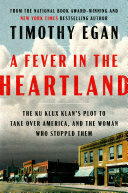
Currently reading: A Fever in the Heartland by Timothy Egan 📚
Despite being from Indiana, I feel like I’ve heard very little about this book, which covers the rise of the Indiana KKK in the early 1900s. The book’s central story revolves around the Grand Dragon, a bad man whose bad acts finally land him in enough trouble that the powers that be couldn’t ignore his non-KKK activities any longer. The point, however, is that they ignored most of his activities because institutional power was both in the Klan’s pocket and was leveraged to recruit members up and down the state. Egan takes a powerful, uncomfortable look at how the KKK organized white, Protestant people against everyone else using social and professional organizations and churches, and how they helped shape neighborhood vigilantes into police forces tasked with protecting property and morality.
Fellow Hoosiers will recognize a lot of familiar names, towns and players. That photo in the NYT book review was taken in Marion, Indiana, for example. I’m finishing up an anecdote that takes place in Logansport. New Castle, Muncie, Ft. Wayne, Terre Haute are also places of interest. A reader on Twitter reminded me that the KKK tried to purchase Valaparaiso University, once one of the most prestigious private universities this side of the Mississippi. Examples abound. It’s unsurprising to read that Indianapolis was nearly taken over by the Klan in the 1920s, considering how many in the statehouse openly endorse racist, exclusionary and eugenicist opinions today (including perennial media darling Mitch Daniels).

Finished reading: The Forgotten Girls by Monica Potts 📚
Potts brings her reporting background to this memoir about coming of age in Arkansas, one of the poorest, reddest states, with lengthy explorations of the economic and social policies that create conditions in which women struggle to thrive. I really enjoyed this read for so many reasons, and was pleased that Potts’ voice is empathetic, smart and searching. Very recommended.
Britney's Yellow Wallpaper
Tuesday, November 28, 2023

Finished reading: The Woman in Me by Britney Spears 📚
Come for the juicy tell-all, stay for the damning details on how Britney’s abusive father, codependent mother and opportunist sister ensnared one of the world’s biggest stars into an abusive conservatorship, and consider at length why we ask young starlets to run through these gauntlets in exchange for our attention. It’s neither the complete portrait of the artist nor the feminist manifesto I wish it was, but I came away from it with more empathy and respect for her and what horrors she’s weathered.
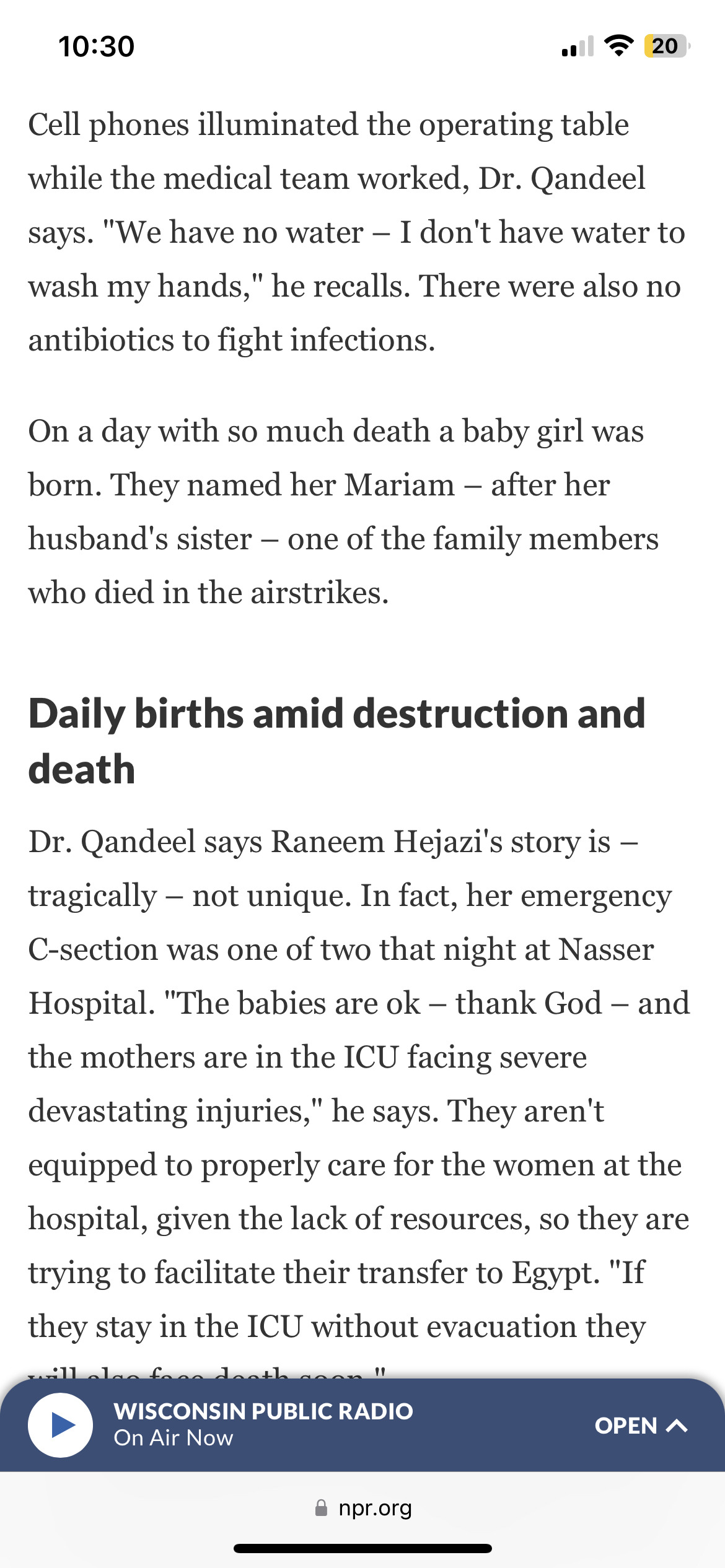
This is a real life nightmare. Nobody deserves to live this way, nobody deserves to die this way. www.npr.org/sections/…

More human and humane
Wednesday, October 25, 2023
Hilariously (sadly? regretfully?), since I’ve been writing online for public audiences since about 1997, I’ve been thinking about the art of posting, community building, and who benefits and how, for a very long time. All of this (https://blog.ayjay.org/the-three-paths-of-micro-blog/) sounds about right, specifically:
“…it will — by design — never be a place for you to monetize your brand, troll, shitpost, or become an influencer. But hey, there are plenty of other platforms better suited for that kind of thing. Micro.blog is better suited for the more human and humane paths I have identified here.”
Very excited for the movie
Wednesday, October 25, 2023

Finished reading: Killers of the Flower Moon by David Grann 📚
“For years after the American Revolution, the public opposed the creation of police departments, fearing that they would become forces of repression.
“Only in the mid-nineteenth century, after the growth of industrial cities and a rash of urban riots—after dread of the so-called dangerous classes surpassed dread of the state—did police departments emerge in the United States.”
Microblogging on the open web - and why care? book.micro.blog
While noodling around on other things, I ran across the omg.lol domain (https://home.omg.lol/), clicked around, found Neatnik (https://neatnik.net/), and this fun PHP project where he created a year-long calendar that automatically resizes to fit a single page.
See the whole year on one sheet of paper. Any sheet of paper: neatnik.net/calendar/

Finished reading: The Fire Next Time by James Baldwin 📚
When I realized I’ve read more about him than by him, I had to rectify that problem. So many of the geopolitical problems he discusses are still relevant, and Baldwin’s voice is as clear and urgent as ever.

Finished reading: Poisonwood Bible by Barbara Kingsolver 📚
It holds up.

Finished reading: Demon Copperhead by Barbara Kingsolver 📚
I forgot how much I love Kingsolver. After I finished this one on a road trip, I turned around and reread Poisonwood Bible on a camping trip.