Posting a lot while I get through the inbox today. Among other stories, WordPress is offering free hosting to students, marketing WP as a way to change how people relate to their own writing. Does a self-hosted public blog make students think differently about audience than a school LMS post does?
Blogs
Computah: Make it a link
Thursday, August 13, 2026
I spent a little time with the blog last night and pulled together two new site features using Claude Cowork. The last time I experimented significantly with Claude like this was to use Claude chat to build the link log from scratch, walking it through my thinking in plain language, then copying and pasting its suggestions into the backend of the site and hitting publish. This time I used Cowork, the tool that runs in the browser, and it clicked through the screens itself, fully taking on the execution of tasks. I have some coding skills, but not the kind these changes required. If I were taking this on, I would need YouTube, Hugo for Dummies, and my own personal IT guy, and still probably couldn’t pull it together.
Last night I asked a few things of Claude: I asked Claude Cowork to get into the backend of the micro.blog site and change my theme to link each line in the linklog back to my original post. The date field in the right column now links back to the original post for each link logged. No problem, easy request with easy execution. I made the request, confirmed the plan, and went about my business while Claude made the edits.
I also asked it to analyze my post content and suggest category tags for groups of content, then to label that content correctly in the backend. Claude reviewed about 500 posts and suggested I add a few new categories to my blog: AI in Practice, Books & Reading and Writing & Language. Then I set up some auto-filters to run at publish time to automatically categorize posts based on keywords moving forward.
Finally, I manually added the archive page, which lets you sort posts by category or year. This means I now have a functional archive here. Enjoy my anodyne thoughts, dear reader.
Adjacent to my day job, I’ve been toying with Claude Pro now for about a year; in my experience, it has improved significantly within the last six months. It’s not perfect: my requested edits were completed, but it also changed the CSS on the linklog so some of the text is too light to read, which I didn’t ask for and don’t want. But it has arguably extended my ability to execute on work that requires skills I don’t otherwise have (such as design and coding). What I do bring to the table is an expansive practical background in publishing and production, and all the language to describe it.
A friend of the blog shared the Embroidered Computer, a programmable 8-bit computer created by using a combination of magnetic and glass beads, gold wire, and traditional gold embroidery techniques to fix material elements to cotton cloth. When complete, it has the processing capacity of a 1950s mainframe computer without the modern silicon microchip. Something about this reminds me of Ellen Ullman’s observation that computers are made of boxes and wires, written on chips and tape. (via)
Claude is launching an AI watermark, one that users can’t opt out of (but can easily outsmart). As internet god Notopoulos wrote, “Claude’s watermarking poses the question: Are you willing to proudly own that you write with AI?” More: What is an AI watermark and how do they work?
This is a pretty good Tiktok breaking down the historical, cultural and religious meanings invoked in the “computah” memes. An important rule of the internet: the best memes are intertextual.

Finished reading: We’ll Prescribe You a Cat by Syou Ishida 📚

Finished reading: Yesteryear A Novel by Caro Claire Burke 📚
Clothing technology: tracing a history of pockets from ancient coin purses to tie-on pouches to today.
I found this piece from an anthology celebrating 50 years of women’s studies, which explores the intersection of scholarship and publishing practices over time.

Finished reading: The Mixed Marriage Project A Memoir of Love, Race, and Family by Dorothy Roberts 📚

Finished reading: Mother Mary Comes to Me by Arundhati Roy 📚

Finished reading: A Language of Limbs by Dylin Hardcastle 📚

Finished reading: My Mother’s Daughter - Finding Myself in My Family’s Fractured Past by Tracy Clark-Flory 📚
“How internet misogyny parallels ‘real-world’ harassment” is a 2007 paper in the Yale Journal of Law and Feminism by my old co-blogger, Jill, on her experience being harassed online by peers she knew IRL. Many parallels to current attitudes, all enabled and accelerated by digital networks and tools.
Another old article on the emotional toll of being an internet personality and a woman with a platform in the public sphere. I’m quoted briefly: I intentionally broke my social presence when I stepped away, which gave me necessary peace but made it harder to claim my work in this arena over time.
It’s a pleasure to read such a deft writer. Currently reading: My Mother’s Daughter - Finding Myself in My Family’s Fractured Past by Tracy Clark-Flory 📚

I followed the discourse on this one, but the book itself was much more sad than I expected. I did appreciate her thoughts on the pressure of balancing a public persona with the reality of being a messy and unfinished person, as we all are. Finished reading: Adult Braces by Lindy West 📚
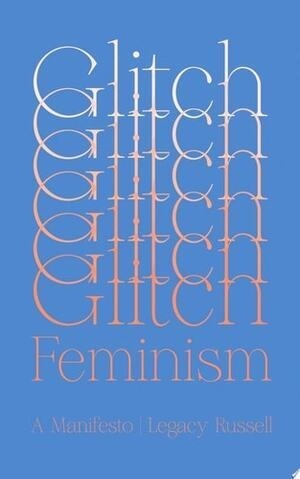
This one was okay. It felt like a series of earnest blog posts without a real throughline. Finished reading: Glitch Feminism by Legacy Russell 📚
Gender, Power and AI: Wrestling for the soul of the network, again
Thursday, May 14, 2026
Stanford’s Clayman Institute ran a virtual panel this morning called “Gender, Power, and Artificial Intelligence,” with Safiya Noble (UCLA), Catherine D’Ignazio (MIT), Angèle Christin (Stanford), and moderator Genevieve Smith, a Clayman Institute Postdoctoral Fellow. The panel applied principles from feminist tech studies to the current moment, and covered how gender norms get encoded in data and reproduced by AI systems, and discussed whether the technology has real capacity for equitable design and implementation at scale.
Noble’s argument throughout is that the governance conversation has gotten too high-level and universalizing while the actual outputs of these systems have profound day-to-day consequences for specific people today. She named the role of AI in the recent gerrymandering of Louisiana and Indiana as examples, and called for tripling down on long-term social science research about AI’s impacts. She also pointed out that philanthropy is retreating from feminist academic and organizational work because that work originates from the same dynamics that critique philanthropy itself, precisely at a point when this research is sorely needed. A lot of money is moving in AI, and very little of it is funding the people best positioned to study how it impacts everyone downstream.
D’Ignazio was asked directly whether feminist generative AI at scale is possible. Her answer was no, with caveats, given who owns the technology today and the current emphasis on profit motive. She suggested it is more important to consider how to organize around our relationship to technology, and how we might approach questions of profit and ownership, policy and decision-making, and data and tech governance.
She provided an example of a reasonable use case by walking us through a project from her Data + Feminism Lab. The example is documented at length in her recent book “Counting Feminicide: Data Feminism in Action,” where her team partnered with activists who scour news reports to document the gender-related killing of women and girls, including cisgender and transgender women. The lab built a very lightweight AI-based approach that streamlines the scanning and identification of news stories as possible cases to include in their project, supercharging their work (note: very similar to how the NYT uses AI to analyze data for reporting). In this example, the AI’s job is task-scoped, democratically co-determined with the people who use it, and small. Smith picked this up: there is an idea baked into the current LLM moment that AI must scale to make it marketable, and the alternative is using purpose-built models that are right-sized against a body of work.
Christin spoke at length about how embodiment is one of the primary focuses of feminist theory, and how AI perpetuates the “disembodied” illusion of technology, and how this dynamic shows up in everything from the marketing to UX to user comprehension. This spoke to my thoughts on how the single-interface design of LLM chat reproduces Haraway’s “god trick,” knowledge that presents as universal while concealing the specific and situated position it comes from.
The parallel I kept returning to, listening to this, is one I think about often with my own cohort of early bloggers, women who grew up alongside the rise of the internet — and then the rise of ad tech. The internet of the late 1990s and early 2000s was being shaped by several camps: writers, students, information architects, and user-centric researchers who saw it as an information access network and a space of possibility; entrepreneurs and opportunists who saw it as a channel for marketing, monetization and extraction; and a smaller boycott camp that wanted to limit and refuse the whole personal computing and digital revolution altogether.
It was generally considered weird to be a girl on a computer or a woman on the internet — so weird that many of our peers didn’t recognize us at all — and we were there anyway, making stuff, witnessing, learning, advocating, producing, influencing. So when I watch some of my old peers, many of whom are professional writers and academics today, treat LLMs as a question of refusal rather than a condition to engage with critically, I worry we are abdicating a responsibility at precisely the moment when our technical and rhetorical expertise applies. Their refusal has good logic: user-centric researchers and communities engaged extensively with the early internet and the extractive camp won anyway, so why expect a different outcome here?
But Noble’s work on algorithmic bias attributes that failure not to engagement, but to the institutional and financial disadvantages that user-centric approaches operated under relative to gargantuan commercial interests. David and Goliath. That gap does not close through abstention. Understanding the trade-offs around tech, producing knowledge and analysis that does not depend on investors and marketers to frame the platform and the questions, requires presence. Refusal cedes so much ground.
Overall, the recommendations from the panel were practical. Noble called for people with capital (and the political will to spend it) to consider how to put money toward socially responsible research and development. D’Ignazio called for alternative funding infrastructure outside of venture capital logic, and pointed at European digital sovereignty models as worthy of consideration here. She also gestured at the popular AI Skeptics reading group as one current example of mad-and-commiserating-as-organizing that is creating safe psychological space for people to talk about AI and its tradeoffs. Christin’s recommendation was community organizing, on the grounds that LLMs are unpopular with a lot of people who feel there is no space to say so, and that finding those spaces is itself worthy because it provides shared language and awareness of others’ knowledge and experiences.
Personally, it was refreshing to hear reflections on the work (and the feelings) of being inside institutions that are being reshaped by AI, and being responsible for some of how that reshaping gets communicated and absorbed. I’m thinking about the incredible value of interdisciplinary governance, and how the commitment to governance is a specific position, and all the margins to consider.
Further reading:
Catherine D’Ignazio and Lauren Klein, Data Feminism. The foundational text on applying intersectional feminist thinking to data science practice.
Catherine D’Ignazio, Counting Feminicide: Data Feminism in Action. Extended case study of the grassroots data activism project D’Ignazio described on the panel.
D’Ignazio et al., “Feminicide and Counterdata Production.” Research paper on the counterdata methodology behind the femicide tracking project.
D’Ignazio et al., “Data Feminism for AI.” Conference paper extending the data feminism framework to questions specific to AI systems.
Safiya Noble, Algorithms of Oppression. Noble’s study of how commercial search engines reinforce racism and sexism through their ranking systems.
Donna Haraway, “Situated Knowledges: The Science Question in Feminism and the Privilege of Partial Perspective” (1988). The original essay where Haraway introduces the god trick and the case for situated, embodied knowledge against the view from nowhere.
How early blogging tools like Movable Type made reverse-chronological posting the path of least resistance, killing the curated, librarian-style personal homepage and locking the whole web into the chronostream.
More on personal websites as digital gardens.
Some contemporary thoughts from Ana Rodrigues on the perennial question of being a “woman in tech.”
Added a Wayback link preserver plugin to the site. This lightweight code detects broken external links on the blog and shows clickable Wayback Machine fallbacks so readers can still access the content. Handy when we’re working on the indie web where the web is fragile.

Finished reading: The Bluest Eye by Toni Morrison 📚
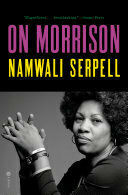
Read this alongside The Bluest Eye. Finished reading: On Morrison by Namwali Serpell 📚
A quarter of the way in and already exhausted/confounded. Currently reading: Adult Braces by Lindy West 📚
I’m seeing grunge icons L7 in concert with Amyl and the Sniffers this summer and have been reading a lot about the ’90s indie rock era in the meantime. One frame I keep encountering positions grunge as regional punk musicians navigating a global, corporate pop mainstream – awkward, crass and vulgar, but in the big leagues all the same. Reading the Auf der Maur bio reminded me that a lot of the punk scene was steeped in ideas about social roles and archetypes and oriented around upending them – or at least giving them a healthy challenge. This subculture was also populated by poets and artists in the classical sense. The retro polish around ’90s pop culture has flattened that texture, but it was genuinely a thing.
The era also introduced the woman rock star, introducing women who wrote and performed with full creative authority, not just as muses, groupies or singers. The reception from fans and critics was mixed, and the discourse around Courtney Love in particular was gross and volatile. Most of the positions she was vilified for read as entirely unremarkable today. I was a teenager during all of this, too young to meaningfully participate, but the aesthetic dominated my early adolescence. At the time I loved Tori Amos and PJ Harvey like kids now love Chappell Roan. What I forgot over time is how literary the era was, and how romantic, both in the literary sense and in relation to the New Romantics of the 1980’s. Big culture lessons for a starry-eyed teenager.
L7’s music is not that deep – it’s metal for meatheads, by design – but their politics and presence were. While poking around, I found that L7 was one of four bands featured in the 1995 documentary film Not Bad For a Girl, which was co-produced by Love and Kurt Cobain. The film focused on several all-female indie punk bands and won Best Documentary at the New York Underground Film Festival in 1996. I’ve never heard of it before now. It got middling reviews from critics then, and it’s not available streaming in full in English, unless you’re viewing it here at this dubious Google Drive link – which I will do and report back.
It looks like Wordpress has produced a short-form blogging app that duplicates the model we are trying over here on the even-more-indie web. I might give it a spin.

Finished reading: Even the Good Girls Will Cry A ’90s Rock Memoir by Melissa Auf der Maur 📚
Last night I had dinner with a friend in tech who recently attended a training on AI and analytics, where they made the observation that we’re in the “Napster era” of artificial intelligence. It’s an imperfect comparison but useful to consider.