Reading about personalized LLMs and the risks of the digital twin metaphor.
Reading about personalized LLMs and the risks of the digital twin metaphor.

Finished reading: Multipliers by Liz Wiseman 📚
404 Media on Project Lily, the ChatGPT project where humans read users’ prompts – including sensitive and personal information – to better train the product.

Finished reading: Suffer a Witch A Memoir by Joy McCullough 📚
In honor of Gloria Steinem’s passing (rest in power), an article on the business and activist tensions present in, and the long-tail value of, feminist publishing efforts. And a 2019 dissertation on organized literacy education as a civil rights effort. A trip to the bookstore is in order.
A composition teacher friend shared this paper on social media: Lester Faigley’s “Literacy after the Revolution”, the essay version of his 1996 CCCC Chair’s address. In it, the author argues that the economic impacts of the digital revolution had begun to undo an older commitment, formed in the Civil Rights era, to teaching literacy as a path toward equality. He further argues that writing instruction was being reorganized around tools owned by a few firms (then: Netscape, Microsoft) at a moment when wealth was concentrating upward. Faigley left us with the question of whether educators can hold onto literacy-for-equality while the tides run against it.
Thirty years later, the worry has a new face: AI will do young people’s writing for them and their thinking with it. Ultimately, Faigley believed the need for the skills that composition teaches will keep growing, not despite, but because of our need to convey information in and around that technology and the humanity it serves in a complex society. Does that suspicion hold water today?
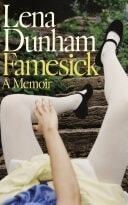
Finished reading: Famesick by Lena Dunham 📚
To read: this report from Common Sense Media, “Talk, Trust and Trade-Offs: How and Why Teens Use AI Companions.” About a third of teens have turned to an AI for serious conversations about their own mental health and relationships, showing these tools are already embedded in teen social life.
I listened to two great podcasts this week exploring the tangle of human/AI relationships. In “Computer Love,” the guests explore whether these relationships are good for us, and in “Your AI Companion Doesn’t Love You,” they explore the technical and business implications of these relationships. Both of these feature podcaster and writer Bridget Todd, who is promoting her new book “Love at First Prompt.” As of today, about 1 in 5 young people in the U.S. have asked a chatbot for mental health advice, and 1 in 5 high schoolers have had a romantic AI relationship.
Note: Todd’s (excellent) podcast title is a reference to Rule 30 of the internet.
I can’t believe it’s mid-August. I’m terribly behind on my reading list. Still, I did want to draw attention to this entertaining and extremely shareable article on the glory of Record Head, a legendary record store in Milwaukee. Make sure to watch their public access TV commercials at the link.

Finished reading: We’ll Prescribe You a Cat by Syou Ishida 📚
Henry Rollins and Ian Mackaye have taken on a critical calling: preserving the legacy of The Cramps for posterity.

Finished reading: Yesteryear A Novel by Caro Claire Burke 📚
If you’re looking to be depressed, see this early research from Business Insider on the social implications of GLP-1 usage and how it may impact relationships in the home and workplace.
Dan Hon made me laugh with “carbon-based chauvinism.”
I found this piece from an anthology celebrating 50 years of women’s studies, which explores the intersection of scholarship and publishing practices over time.
Among other disappointing SCOTUS announcements today: Supreme Court Rejects Lawsuit Alleging Roundup Weedkiller Caused Cancer. In a previous life, I worked in the same college as a cancer researcher who developed twenty years of conclusive research that Roundup causes cancer in dogs by studying Scottish terriers. Scotties, it turns out, tend to be susceptible to bladder cancer, and thus make good candidates for related research when cancer is present. For several years, I got to witness a veritable army of Scottie dogs dressed in bowties and plaid jovially trotting in and out of our veterinary research hospital to seed her research during their cancer treatments in West Lafayette.
What I learned during that time is that a great deal of veterinary research is about looking for health patterns across species. While not all carcinogens act identically across species, most known cancer-causing agents affect both dogs and people in similar ways. Because dogs share our homes and have similar biological responses to toxins, scientists track canine cancers as an early-warning system for human health risks and to research viable interventions to treat them.
In any case, while I don’t know the ins and outs of the specific laws in play here, this is a disappointing outcome when it comes to the science.
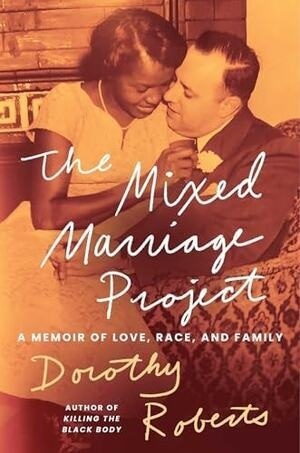
Finished reading: The Mixed Marriage Project A Memoir of Love, Race, and Family by Dorothy Roberts 📚

Finished reading: Mother Mary Comes to Me by Arundhati Roy 📚

Finished reading: A Language of Limbs by Dylin Hardcastle 📚
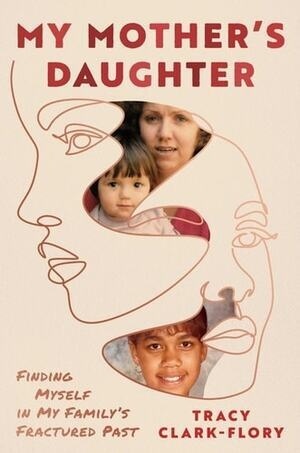
Finished reading: My Mother’s Daughter - Finding Myself in My Family’s Fractured Past by Tracy Clark-Flory 📚
“How internet misogyny parallels ‘real-world’ harassment” is a 2007 paper in the Yale Journal of Law and Feminism by my old co-blogger, Jill, on her experience being harassed online by peers she knew IRL. Many parallels to current attitudes, all enabled and accelerated by digital networks and tools.
It’s a pleasure to read such a deft writer. Currently reading: My Mother’s Daughter - Finding Myself in My Family’s Fractured Past by Tracy Clark-Flory 📚

I followed the discourse on this one, but the book itself was much more sad than I expected. I did appreciate her thoughts on the pressure of balancing a public persona with the reality of being a messy and unfinished person, as we all are. Finished reading: Adult Braces by Lindy West 📚
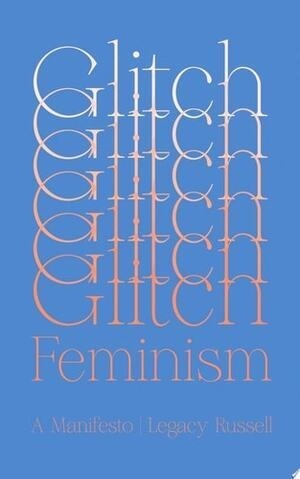
This one was okay. It felt like a series of earnest blog posts without a real throughline. Finished reading: Glitch Feminism by Legacy Russell 📚
There are enough common signs of AI writing now that the subject has its own Wikipedia page. Via John Gallagher’s latest on “template rhetoric.”

Finished reading: The Bluest Eye by Toni Morrison 📚
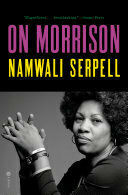
Read this alongside The Bluest Eye. Finished reading: On Morrison by Namwali Serpell 📚
A quarter of the way in and already exhausted/confounded. Currently reading: Adult Braces by Lindy West 📚