1000 Mountains: a Gary, Indiana, reading list
🎵: A Thousand Mountains - Freddie Gibbs and The Alchemist
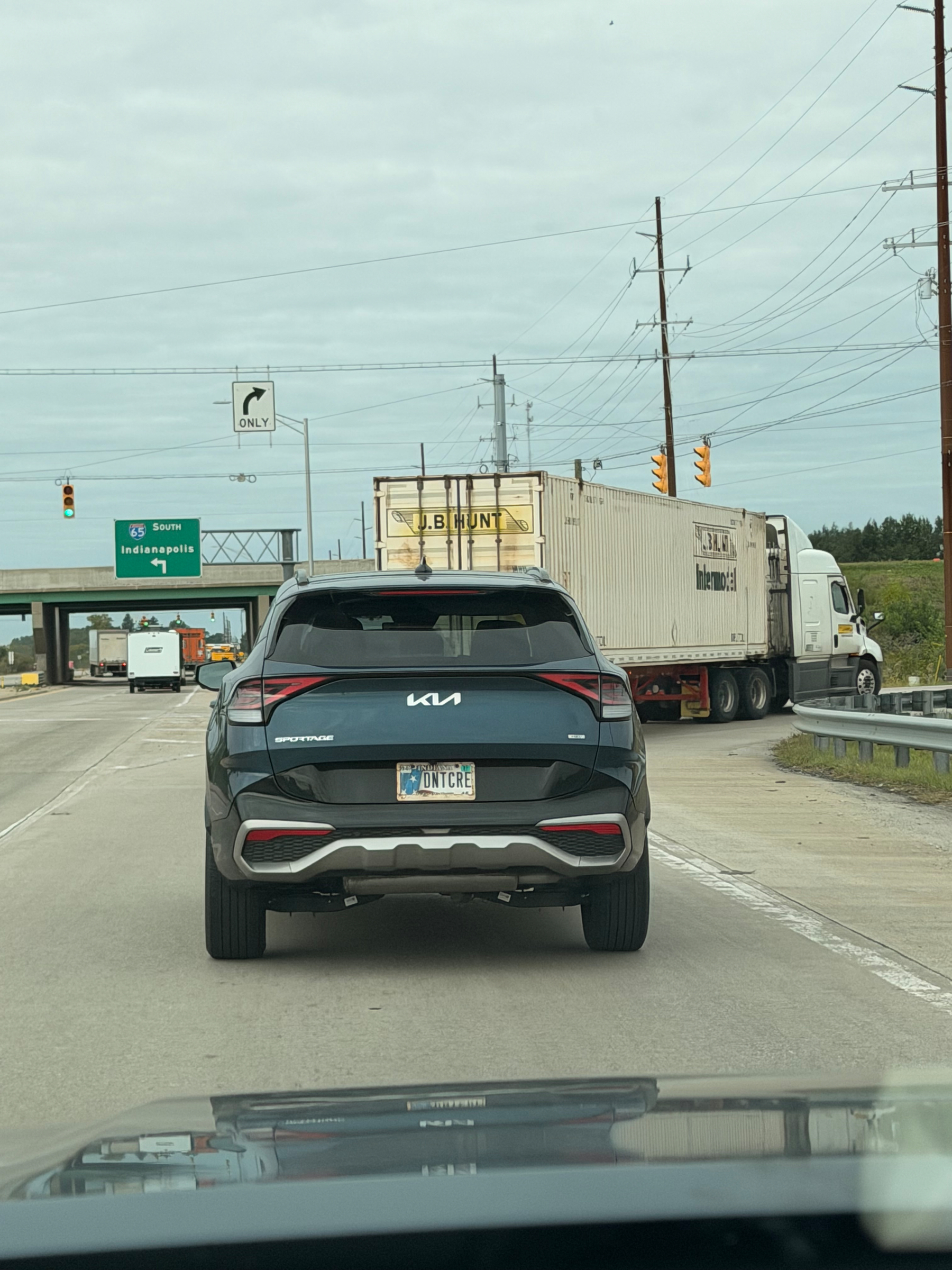
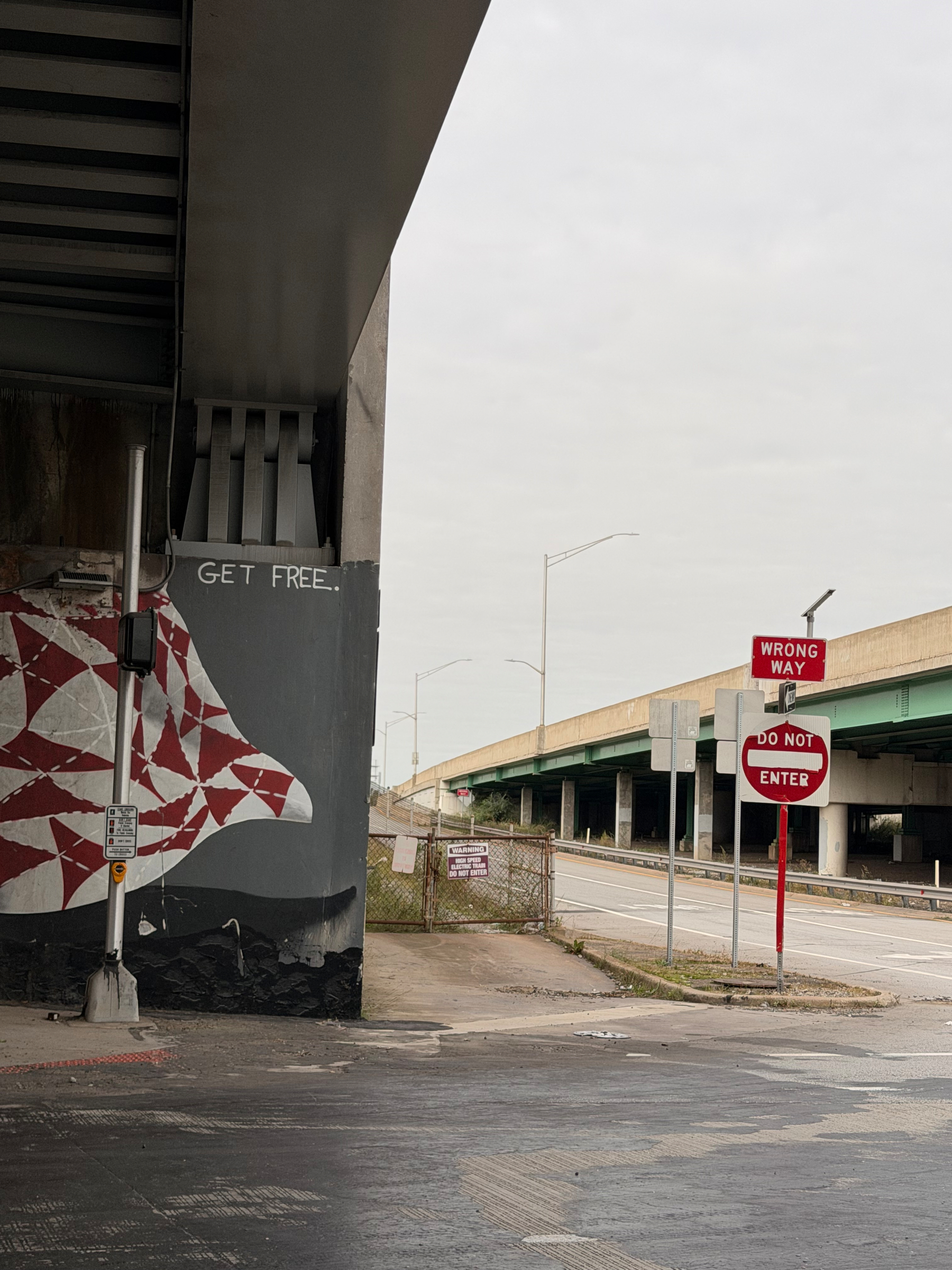
Yesterday I cut through Gary to get around a traffic jam on the toll road and picked up the Dan Ryan and the Skyway. Since living in Madison, I’ve made some version of that drive more times than I can count. I grew up south of Gary, at the edge of what a colleague called “the Chicago ombré” and in my twenties my friends and I spent our weekends in The Region, thrifting our way across Lake County and going out to underage hip hop clubs in East Chicago. To many, Gary is the city you drive through on the way to somewhere else.
The Skyway has a history of its own. Chicago built it in 1958 with revenue bonds, then the bonds defaulted in 1963, and the city spent the next few decades catching up on deferred maintenance, according to Louise Nelson Dyble’s history of the road. In 2005 the Daley administration leased it for 99 years to Cintra and Macquarie for $1.83 billion, which made it the first existing toll road in the country to be privatized. Eleven years later the consortium sold the lease to three Canadian pension funds for $2.8 billion. The crossing now costs $8.10 in a car, and CBS Chicago reports that tolls have gone up more than 200 percent since the lease, about three and a half times the rate of inflation.
Indiana saw the incentives in this arrangement and followed along. In 2006 Mitch Daniels leased the Indiana Toll Road to the same Macquarie-Cintra group for 75 years and $3.8 billion, and he used the money to pay for Major Moves, his statewide highway program. Stateline’s 2012 retrospective called the lease one of the most divisive things Daniels did as governor. The bill passed without a single House Democrat, and the Region hated it. At a town hall in Crown Point, one resident told Daniels the deal amounted to taxation without representation. The operator went into Chapter 11 in 2014, and an Australian fund bought the lease the next year for $5.7 billion. A big share of the original money built I-69 between Evansville and the Crane naval base, at the other end of the state. When Eric Holcomb later approved a truck toll hike in exchange for another $1 billion, he had to deny in public that the Region was once again paying for highways its drivers would never use.
The state keeps the paperwork on deals like these. The Indiana State Archives recently opened a new downtown building in Indianapolis on Thursday after 25 years in a “temporary” warehouse on East 30th Street, a former RCA record-stamping plant whose roof leaked partly because people shot holes in it. An old combination safe in the new building holds the state’s original constitutions, Jim Jones’s church incorporation papers, and Donald Trump’s application for a casino in Gary. Upstairs, a conservator expects to spend four to six weeks piecing together a Porter County survey map that had broken into fragments. The reading room is open to the public Tuesday through Saturday, and the staff asks you to make an appointment so they can pull the boxes before you arrive.
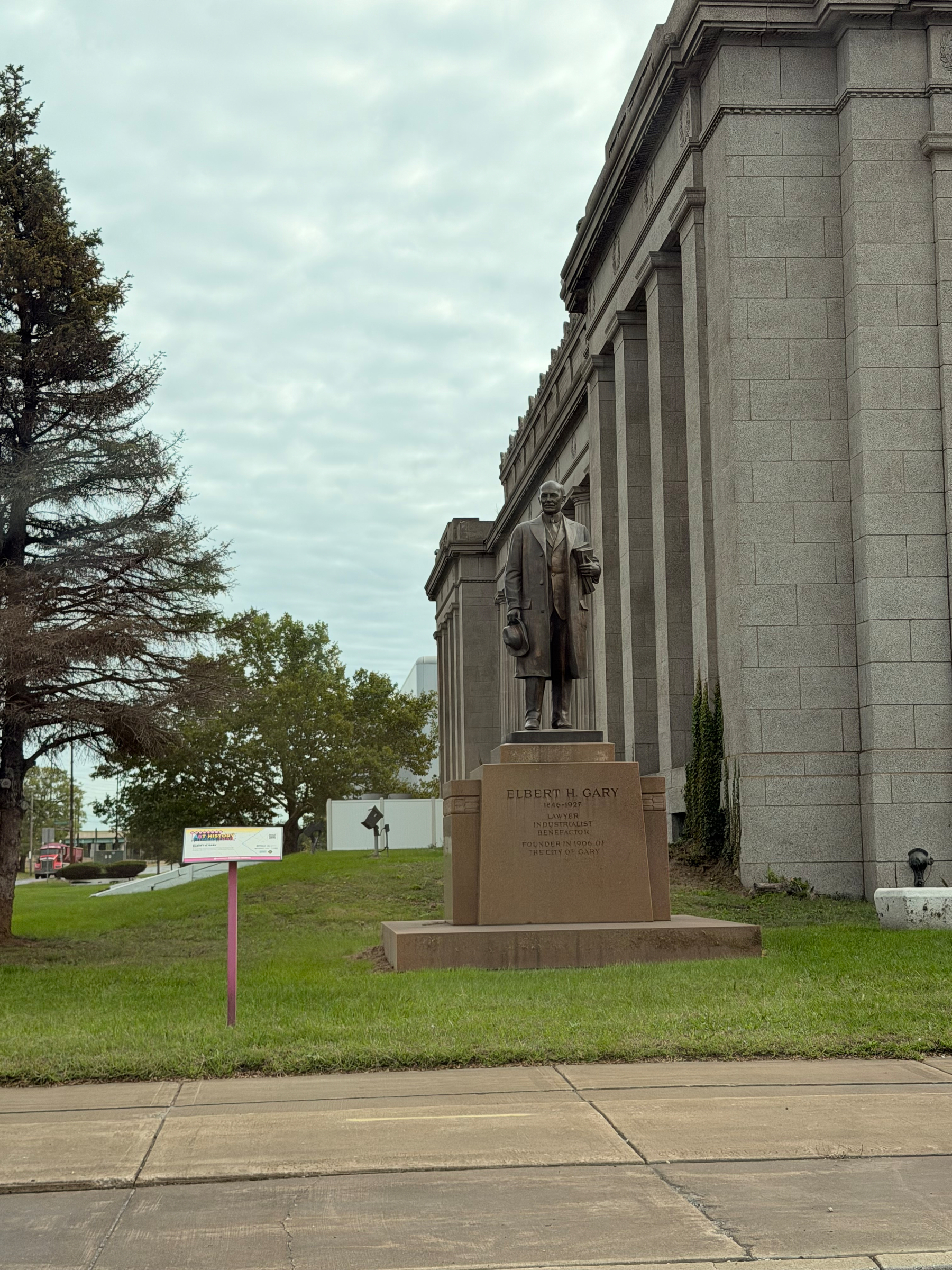
Gary has been on the wrong end of these deals since before it had a name. Paige Williams’s New Yorker piece on Gary and U.S. Steel asks whether a company town once called “the most miserable city in America” can remake itself. U.S. Steel founded Gary in 1906 to house the workers for its mills, and in 1920 Carl Sandburg published a poem about how the people running the place saw those workers.
Freddie Gibbs grew up on Gary’s east side, and Jeff Weiss has profiled him twice. The 2021 profile in The Ringer catches Gibbs around his Grammy nomination for Alfredo and opens on a 2009 visit to his Van Nuys apartment, where Gibbs told Weiss that robbing freight trains was a popular hobby back home. Weiss’s earlier piece, The Miseducation of Freddie Gibbs, adds that one of Gibbs’s teachers got fired for robbing them too.
Gibbs’s father, Warren Tipton, spent about twenty years on the Gary police force and later sang with the Chi-Lites. He died in May, and AllHipHop’s obituary places him in the same Gary music scene that produced the Jacksons. That detail stuck with me because my ex-father-in-law was a police officer and chief of police downstate during the same years, and also played drums in a local band. Jamelle Bouie has historically described police departments as “jobs for the boys,” a steady public paycheck handed to working-class men, and that fits both of their careers better than anything about their relationships to law and order. In towns where the mills were shedding jobs, a badge was one of the few paychecks that came with a pension, and a man who could sing still needed that safety net.
Policing in the Region has uglier chapters than that. The Chicago Sun-Times has spent years covering the federal case against the Sin City Deciples, a motorcycle club founded in Gary in 1967. One member admitted he worked as a Gary police chaplain while killing two men, one of them the son of a former Gary police chief. The Chicago Reader’s Tiger King of the Midwest profiles Roy “Roy Boy” Cooper, who ran a tattoo shop called the Badlands with Bengal tigers in cages next to the chairs. Tattooing was illegal in Indiana then, and Cooper’s lawyer reportedly steered him to Gary because the police had bigger problems than a tattoo shop that paid its taxes. Media Burn has raw footage of Cooper setting a leashed tiger on a pool table while his wife runs through the rest of their animals, which included a grizzly bear and a baboon.
Anderson went through the same collapse with auto parts. General Motors moved in during the 1920s and eventually ran two divisions there, Delco-Remy for electrical systems and Guide Lamp for headlights. By the time Jon Alpert made Dirty Driving: Thundercars of Indiana for HBO in 2008, a town that once had 33,000 GM jobs had empty factories and shuttered stores, and what was left of it went to the Anderson Speedway every Friday night. The Herald Bulletin caught up with one of the film’s drivers, Sammy Hawkins, as he flew home from the New York premiere to a Firestone job in Noblesville that he expected to lose. His line in the film is that Anderson doesn’t make cars anymore, but it can still race them and wreck them.
Music in Gary started in the mills. Joe Jackson ran a crane and played guitar in a band called the Falcons, which never got a record deal, so he kept the mill job and trained his sons into the Jackson 5 instead. Their first contract came from Steeltown Records, a Gary label, in 1967, and “Big Boy” was a local hit before Motown signed them. Most people in a mill town who can play keep the day job, and the ones who make it usually leave.
Akron went through its own version a decade later, with rubber instead of steel. Midstory’s history of how Akron became “the new Liverpool” describes Devo, Tin Huey, the Bizarros, and the Rubber City Rebels as kids from factory families trying not to follow their fathers into the plants. The scene got its home during one of the longest rubber workers’ strikes in the city’s history, when the Rubber City Rebels took over a rubber workers’ bar called the Crypt, as PBS Western Reserve tells it in It’s Everything, and Then It’s Gone. Chris Smith’s 2024 Devo documentary picks up the story from Kent State and follows the band into the early days of MTV.
Detroit turned its losses into techno. Juan Atkins, Derrick May, and Kevin Saunderson learned Kraftwerk and Parliament from a late-night DJ called the Electrifyin’ Mojo, and by 1987 more than half of Detroit’s manufacturing, retail, and wholesale base was gone, as SPIN reported in 1998. Midstory’s Built to Boom traces the line from the assembly plants through Motown to techno, and May describes sampling industrial noise, traffic, and construction into his tracks.
The techno ran straight into the rap Jorjiana grew up on. NPR’s piece on how Detroit and Flint became havens for rap dark horses credits the producer Helluva with a “basement sound” of ominous pianos and synth stabs, which he built by crossing West Coast gangsta rap with Detroit techno, and it describes the Flint rappers as a crew of flippant, vulgar jokers. Flintside’s history of the Flint scene shows how a co-sign from Detroit’s Peezy lifted Rio Da Yung OG and everyone around him. Lil Yachty spent years showing up on Michigan records, and he later vouched for Jorjiana too.
Jorjiana is 21, and a single mom, and from Michigan City, just down the shore from Gary. The Times of Northwest Indiana profiled her recently after “ILBB2” took off, and her Complex interview covers a childhood spent in foster care moving between relatives. By her account, her music career started with screwing around with her friends around town. She and her friends were bored during the pandemic, so they freestyled in her car, and she posted the results, doing actual numbers. She told Justin Moran that her friends talked her into cross-posting the TikTok clips to Instagram, which she barely used, and that’s where the A&Rs found her. At the time she didn’t know what an A&R was. In a clip Complex posted, she admits she doesn’t know who Freddie Gibbs is either, so what ties her to Gary is the shoreline more than any influence. She should get familiar with his catalog.
Plenty of good bands started as friends goofing off, which “industry plant" commenters might keep in mind. Devo began as a satirical art project at Kent State. Ron and Russell Mael studied graphic design and film at UCLA before Sparks, and Edgar Wright’s The Sparks Brothers spends a lot of time on how they built their act for Top of the Pops closeups. Both bands treated the dominant screen of their time as part of the instrument. Jorjiana’s screen is the short-form feed, and I’ve been watching her work it for the last year or so: snippets of songs previewed, clips pushed to every platform, a freestyle on On The Radar at the end of 2024 that brought more than a dozen labels calling, a GloRilla remix, and co-signs from Lil Yachty and GloRilla.
If you want to know what Gary is doing now, read Capital B Gary, which covers the city more consistently than anyone else. Start with their feature on Koney King, a Broadway diner that has been serving chili for more than a century, and then look through their 2024 year in photos, which has residents cleaning up parks on the East Side and crowds on the beach for the eclipse.
I, myself, had a run-in with a white supremacist Indiana biker gang in my twenties in West Lafayette, also connected to a money-laundering tattoo shop. Someday I’ll commit the story to paper.