A quick read by a singular voice, heavy on descriptions of the New York art and music scene of the 90s. Like many punk memoirs, it’s a tribute to the many names that made the movement and a memorial for a city that no longer exists. Gordon’s voice is kind and bold, curious and smart. Her descriptions of growing up in LA and coming of age in New York are painterly and poetic. Her takes are generous for all but one person: her ex-husband.
All my respect to her for opening and closing the books with her raw reflections on Thurston’s mundane and deeply uncool betrayal.
The relevance of these authors, imo, is about women’s buying power in the ex-evangelical and ex-Mormon movement. But I think it’s pretty difficult to think publicly about ideas like liberation or, say, bodily autonomy when you aren’t regularly entertaining trans politics or questioning carceral politics.
The Bookshelves feature of Micro.blog is easily my favorite of this platform. It sits right at the intersection of medium and function: as a reader I want to keep track of things, but I don’t need so much infrastructure around it. Just some checkmarks and a place to dash off my immediate thoughts.
I’ve been keeping my virtual bookshelf up to date while pushing myself to take on a bunch of literary fiction, but I’m tired, reader. So instead of laboring on with a pile of good books I didn’t really want to read, I lined up a bunch of rock n’ roll memoirs for the summer while I manifest camping, hammocks and time otherwise spent by a lake.
I very much enjoyed this book. Despite the heavy subjects, ultimately culminating in a reflection on the ongoing conflict in Palestine that can’t be missed, it was a compelling read that I’ve returned to many times as a reference. The mirror as metaphor for the inexplicable stories in the news.
It’s spring, so my lizard brain is locked on the excitement of garden-planning. The backyard is a blank slate, virtually untouched for ten years until we moved in and removed a wild grapevine so overgrown it looked like a hedge. I have my work cut out for me.
Just finished rereading “Station Eleven” for my beloved book club. It’s so well-written that I find myself annoyed and jealous by it, it’s that good. It makes me consider the legacy of art-making - grassroots, human-made art - and its role in crafting meaning and beauty out of the grind of living.
I got to eat at my first Michelin star restaurant this weekend, Kasama in Chicago, which you may recognize from The Bear. We braved the line during the day to try their daytime menu, including a hearty breakfast and a selection of lovely, delicate pastries. Beautiful food, worth a wait.
Light and clever enough for an easy read, while serious enough to hold my attention. Love the demonstrations of mutual care on the margins of polite society.
A couple of years ago I was featured on the LGM podcast, as a speaker on the oral history of the blogosphere. Posting it here for posterity: www.lawyersgunsmoneyblog.com/2022/07/o…
The internet says Joann fabrics is going to declare bankruptcy, putting a huge market of individual crafters without access to in-person retail craft spaces into a tailspin. It’s likely they will ask their creditors to restructure their debt, making them able to keep some stores open. The whole market relies heavily on in-person shopping (it’s a textural and sensory shopping experience, which is the point!) and hasn’t pivoted well to e-commerce.
This is one of my favorite pet subjects. Globally, the arts and crafts market overwhelmingly caters to women and children and it’s HUGE, commanding a very dedicated and loyal customer base. And still, it struggles.
Despite an influx of crafters during the shutdown, retail craft stores have struggled to strike a balance between sustainable e-commerce and in-person retail strategies. Other issues: For months after the pandemic, the Joann’s in my neighborhood struggled to keep the place stocked and staffed, exacerbated by skyrocketing shipping costs and shifts in the retail worker market after the shutdowns. Kids went back to school, cooling the market for arts and crafts activities on which to spend their time. And with lagging incomes and cost of living increases eating into people’s spending money, customers just don’t have the bandwidth they may be used to.
In my experience, customers don’t love shopping at a Michaels or a Joann’s, but they appreciate the ability to get what they need, mostly on demand, and to do so in-person where you can handle the materials before you buy them. Fiber arts people, for example, put a lot of importance on the weight, texture and color of their tools and materials - and for good reason! Pleasant tools make for a pleasant experience - and for pleasant outcomes. Indie retailers corner this market by keeping inventory low, building relationships with customers, creating affinity using social media marketing and by nurturing community with digital learning and forums. Crafters from around the world can share tricks, tools, patterns and finished items with like-minded people. The large-scale retailers can’t compete with that and haven’t really tried.
It’s unclear what’s next, but I’m thinking of all the people who live in places that can’t sustain a standalone fabric or yarn store. Rural makers can sometimes find tools and materials in resale markets like Facebook Marketplace, and sometimes you can find decent stuff at the local flea, or at specialty shop, such as a small machine repair shop that works on sewing machines. A lot of those folks won’t have a store to go to, and will have to travel to shop in person or resort to online retailers that don’t meet their needs.
I’ve been waiting for this one because it’s a story I know well. It is an impeccably reported book covering how young women navigated a compromised, stigmatized, coercive landscape around unplanned pregnancies in the late 20th century. Sisson is a comprehensive writer whose reporting is deeply empathetic, based on her personal experience as an activist and academic working in reproductive justice alongside extensive research. She discusses the history of the adoption movement at length, connecting it to other institutional family separation movements, and considers it alongside the choice to abort unplanned pregnancies and against the decision to parent anyway, often in a deeply compromised social and political climate.
My deep appreciation to her for telling these stories and telling them well.
Currently reading: Relinquished by Gretchen Sisson 📚
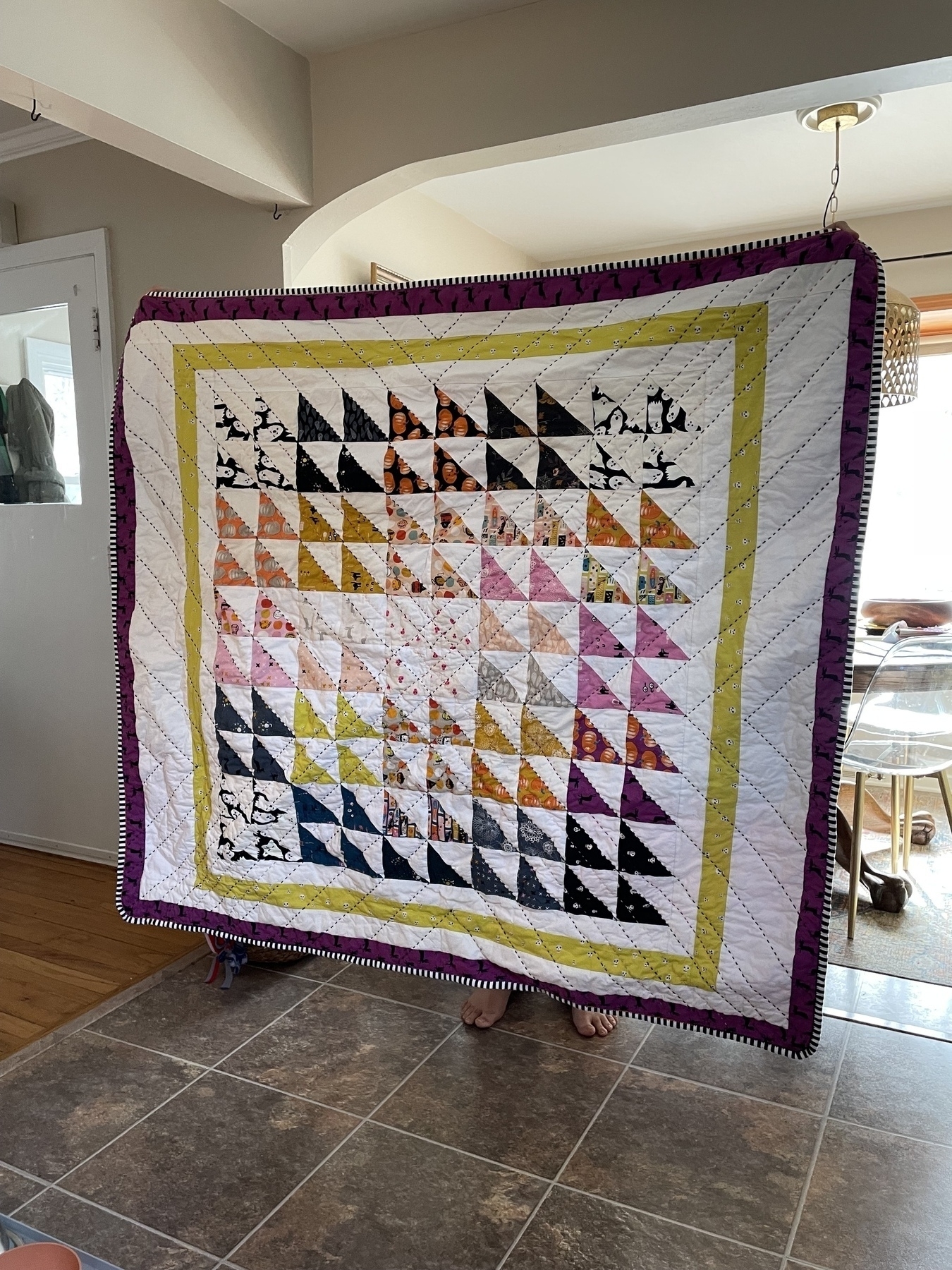
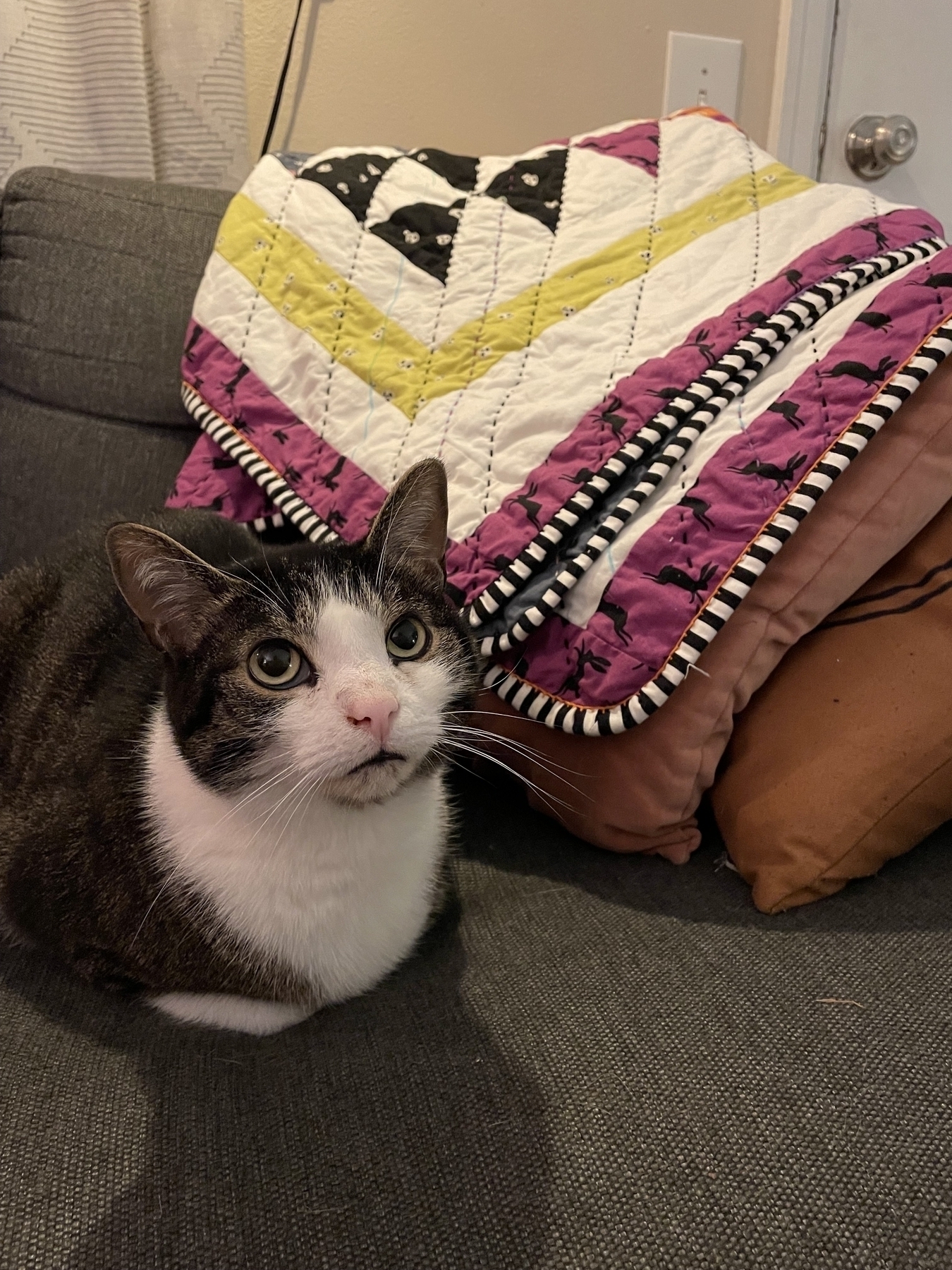
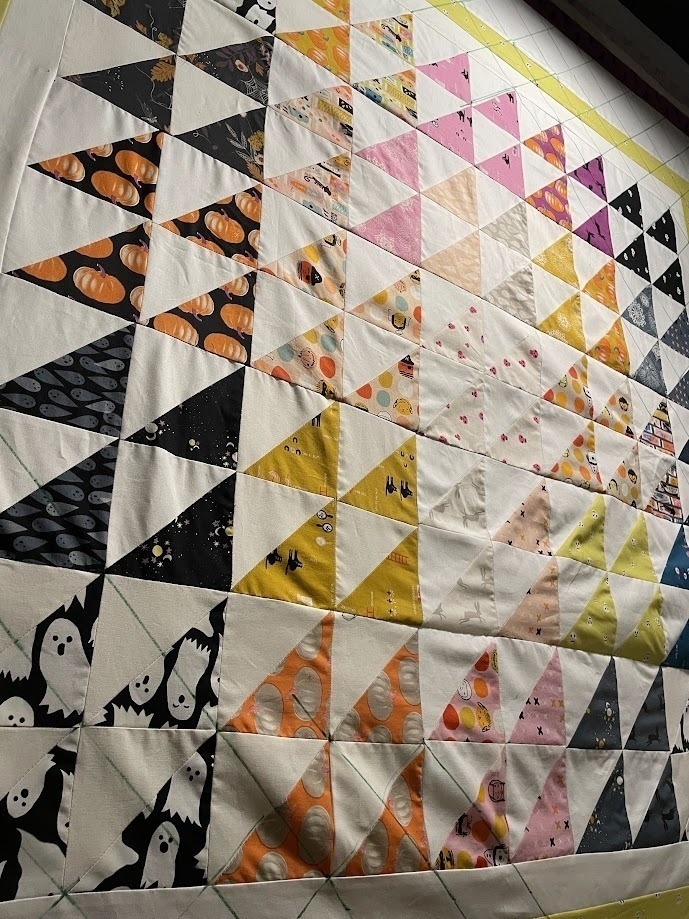
I finished my latest quilt on my birthday, a Halloween quilt made from precuts (no pattern) that I started in 2021? 2022? I don’t know how old it is. It’s been languishing.
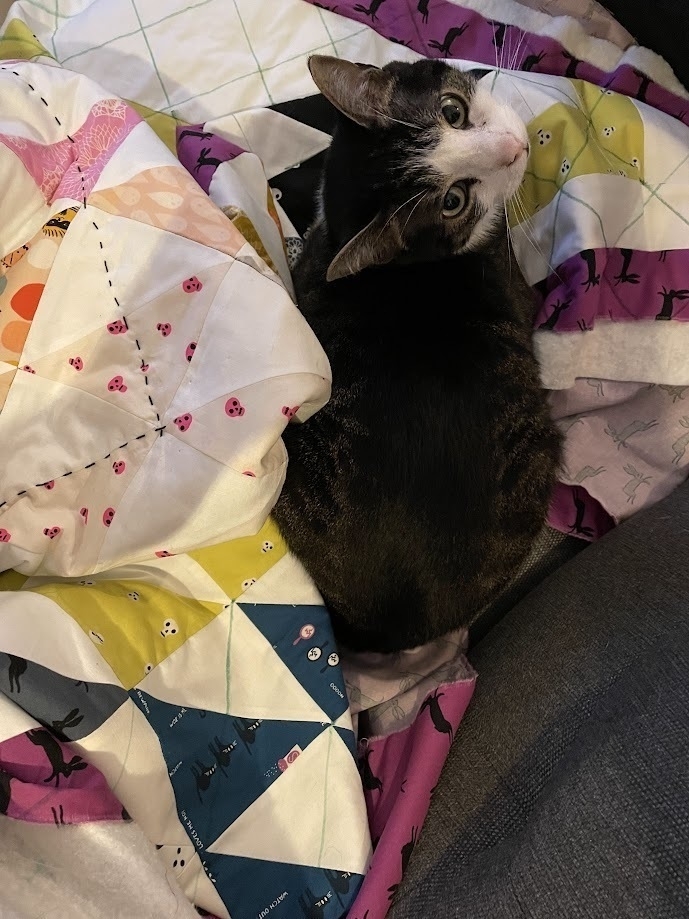
I don’t love shoving a huge quilt through my lil sewing machine, so I still hand quilt these puppies using 6-strand embroidery floss. It’s hard on my hands but gives the final quilt so much texture and weight.
These photos are of the quilt fresh out of the washing machine. Super crinkly and cat-approved.
My delightful book club pulled this YA graphic novel out of the 2023-24 “best of” lists and loved it. There is a remarkable amount of information on each page - truly, you could build a dynamic reading curriculum off of each section - between the written and visual communication. A triumphant example of quality science writing, a great gift book, suitable for just about any audience over the age of ten.
The kiddo and I have been going to the gym together. We could do most of these workouts at home, but she likes the novelty of going to work out in public, people watching, and noodling with electronics while you’re on the elliptical. I enjoy her company there and it’s an incentive for me to keep going. Plus it really does elevate my mood (annoying).
I leveled up from walking to jogging yesterday. Time well spent.
I finished my Halloween 2021 quilt, which used the spooky darlings prints from Ruby Star Society. It’s not my best work, but she’s cute anyway.
This story spun up yesterday with broad outcry from academics, and with good reason. Institutions needs to define and clarify their relationship to tech in order to assuage ongoing concerns about monetization in a fast-moving landscape. gizmodo.com/universit…
This is the kind of book that connects the dots on some big ideas, primarily how traditional gender roles intersect with capitalism to produce the economy, and in turn, how these systems, tensions and behaviors then reproduce inequality. It’s also, at the root, about how ideas form reality. By reframing some of the feminist classics - and the Marxist ones, too - the writers recast some of our old stories about how the world works, and set up a framework for future scholarship across a number of disciplines.
This is an intensely academic and dialectical book by some of the best thinkers who work at the intersection of Marxism and feminism, and worthwhile for anyone thinking about how work, labor, gender, sex, and culture press on the individual and the collective alike.
If this feels too heavy but you like the subject, check out the editor’s prior book, “Feminism for the 99%.” It’s similar in form to bell hooks’ classic “Feminism is for Everybody” but with a clear collectivist and activist call to action.
The (very decorated) author (his first novel) spent time on the faculty in my Big Ten hometown. I already recognize some of the side characters. 👀 Currently reading: Martyr! by Kaveh Akbar 📚
This smart graphic novel zooms in and out on engineered systems happening all around us: electricity, water, the internet. Fascinating and clever. Currently reading: Hidden Systems by Dan Nott 📚
I’m divorcing my Apple Watch because I’m in love with my Oura ring. I need fewer CTAs and notifications in my life, and more reminders to prioritize sleep and mindfulness. Plus, you can pay for one with your HSA.
V proud of myself because, despite going to the quilt store yesterday and getting everything BUT what I went there for, I found enough batting scraps to put together a quilt sandwich and began hand quilting it last night. She’s going to be cute.
The latest You’re Wrong About podcast about the pro-life movement is an excellent primer for anyone who knows a little but doesn’t feel like an expert. Covers the history of the movement, where they came from ideologically, how they organize and why it’s effective. yourewrongabout.com