My delightful book club pulled this YA graphic novel out of the 2023-24 “best of” lists and loved it. There is a remarkable amount of information on each page - truly, you could build a dynamic reading curriculum off of each section - between the written and visual communication. A triumphant example of quality science writing, a great gift book, suitable for just about any audience over the age of ten.
This story spun up yesterday with broad outcry from academics, and with good reason. Institutions needs to define and clarify their relationship to tech in order to assuage ongoing concerns about monetization in a fast-moving landscape. gizmodo.com/universit…
I just spent a pile of money on books, with the goal of reading for pleasure every day, and with the intention of sprinkling some light stuff around my generally serious reading preferences. While I usually read like a dad, heavy on the serious memoirs and book-length nonfiction explainers, I’m trying to take on some lighter reads because mom needs a little sugar with her medicine.
So far, I’m doing an okay job of keeping track of my reading habits here, which is why I ponied up for a paid membership to this site at all: flotisserie.micro.blog/books/
After a stint as an English major and as a writer myself, I got into a habit of reading dozens of articles a day instead of longer form writing: books. I spent a lot of energy in 2023 getting back to books. Thanks to a great book club (you know who you are) and making space to settle in with a great book in a cozy spot, here are my favs from 2023:
📚 Monica Potts, “The Forgotten Girls”
I’ve followed Potts’ career since she was a student blogger turned journalist in the aughts, so seeing her publish this book was a little personally gratifying, too. Potts brings her reporting background to this memoir about coming of age in Arkansas, one of the poorest, reddest states, with lengthy explorations of the economic and social policies that create conditions in which women struggle to thrive. She compares her childhood against a friend who didn’t get out of dodge, and explores what makes the difference in areas where people get left behind.
I really enjoyed this read for so many reasons, and was pleased that Potts’ voice is empathetic, smart and searching despite the challenging material. A mix of memoir and sociology. Very recommended.
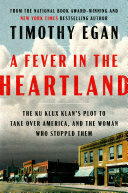
📚 Timothy Egan, “A Fever in the Heartland”
In the roaring twenties, my home state of Indiana was a hotbed of racist activity. The KKK rose to their peak power with something like one in three adult Hoosiers counting themselves among their ranks, by leveraging evangelical churches, law enforcement, and local politicians to curry influence and power. This is ultimately a story about a deathbed testimony that broke the spell, when the telling of the Grand Dragon’s secrets, cruelties and perversions finally brought a public reckoning with the Klan.
📚 Barbara Kingsolver, “Demon Copperhead”
Like Dickens did with “Copperfield,” Kingsolver does with “Copperhead.” This novel explores how institutional poverty harms children, set in an American South that, frankly, felt familiar coming from the lower Midwest. It lives up to the hype and was vindicating and familiar. I listened to this audiobook on a long road trip and the narrator nailed it.
(I forgot how much I love Kingsolver. I finished this and turned around and reread “Poisonwood Bible” - about the hubris of American missionaries in Congo - on a camping trip. It holds up.)
📚 Britney Spears, “The Woman in Me”
Yanno, I didn’t think this would be on my list either, but here we are. Come for the juicy tell-all, stay for the damning details on how Britney’s abusive father, codependent mother and opportunist sister ensnared one of the world’s biggest stars into an abusive conservatorship and stole her time, money and autonomy. Consider at length why we ask young starlets to run through these gauntlets in exchange for our attention. It’s neither the complete portrait of the artist nor the feminist manifesto I wish it was, but I came away from it with more empathy and respect for her and what horrors she’s weathered right under our noses. It’s giving “Yellow Wallpaper,” but pop. Free Britney.
📚 Patrick Radden Keefe, “Empire of Pain: The Secret History of the Sackler Dynasty”
This is a giant tome of a book that nevertheless provides a riveting and thorough history of who knew what when and why it matters. It’s also a study of impunity among the super-rich, and how their money and influence reaches into the public commons. It turns out a lot of modern fiction deals with addiction, opioids in particular, so this became a foundational book for a lot of other reads on this year’s list.
If you don’t want to read the book, but want to know more about the Sacklers and their terrible, coercive global influence, don’t miss the documentary “All the Beauty and the Bloodshed,” which follows artist, activist and addict Nan Goldin as she fights against and grieves for all that opioids have taken from her, and from us. It’s a beautiful testament to art, community and the disenfranchised - and currently streaming on MAX.
I’m building my list for 2024, so let me know what you recommend!
I’m following a new environmental drama in my Hoosier hometown. Some geniuses in the Indiana statehouse decided to court agreements to build gigantic computer chip plants in an area of the state that lacks one critical thing: there’s no water. Computer chip manufacturing apparently requires a ton of water.
“No problem!” the intellectual giants said. “There is the large Wabash River aquifer to the north that we can just have piped 35 miles down to our site.” The only problem is that the math doesn’t math and the people of Indiana hate the idea of giving up their water rights on the word of business men who are now on the record openly lying about the science.
The following quote is building a metaphor so the average person can understand just how much water is planned to be removed from this critical aquifer *** every day *** for this chip plant. The state agency responsible for steering the plans lied by claiming the aquifer will be recharged because it’s connected to Lake Michigan. There’s zero evidence that it is, and there’s no evidence it will be recharged as quickly as it’s tapped, or that the communities downstream that are planned to absorb the runoff can handle this amount of water at all. The more you learn about this, the more you wonder why Indiana would choose such a bad location for a chip plant (the answer is always money).
“Ask people if they know what ‘one acre foot’ means. That’s a volume of water that we commonly refer to in hydrogeology. One acre foot means you have one acre of land that’s flooded to a depth of one foot. Imagine that you’re at the football stadium. Without the end zone, it’s about an acre. And so if you fill that to a depth of one foot, that is 326,000 gallons. Now think about how deep you would have to flood the field to get 1 million gallons – that’s essentially about three feet of water to pump out 1 million gallons per day. To pump out 10 million gallons, that’s a football field flooded to 30 feet. To get to 100 million gallons, you’ve got to flood it over 300 feet. … That’s taller than all the buildings in West Lafayette.”
I’m kind of a nerd about science writing because it takes several types of technical skill and expertise to thread the needle so the layperson can follow along. This book, which won awards from all kinds of industry bodies, is wildly readable considering that it’s about the intersection of biology, commerce and hydrology. Egan covers the ways that people leverage water to meet their needs, which often means treating critical waterways like a cross between a highway and a landfill.
As communities around the Great Lakes basin grow, as as climate change progresses, it’s likely we will see a lot of scuttlebutt around lake water diversion. It’s extremely likely these will turn out to be the biggest environmental and resource conflicts in the coming decades. The author lays it all out, and the updated version includes three new chapters on water fights and, alarmingly, the effect of the invasive Asian carp, a voracious species that reproduces at a disturbing rate—which is transforming the ecology of the river as it makes its way through the Chicago River diversion and ever closer to Lake Michigan.
Despite being from Indiana, I feel like I’ve heard very little about this book, which covers the rise of the Indiana KKK in the early 1900s. The book’s central story revolves around the Grand Dragon, a bad man whose bad acts finally land him in enough trouble that the powers that be couldn’t ignore his non-KKK activities any longer. The point, however, is that they ignored most of his activities because institutional power was both in the Klan’s pocket and was leveraged to recruit members up and down the state. Egan takes a powerful, uncomfortable look at how the KKK organized white, Protestant people against everyone else using social and professional organizations and churches, and how they helped shape neighborhood vigilantes into police forces tasked with protecting property and morality.
Fellow Hoosiers will recognize a lot of familiar names, towns and players. That photo in the NYT book review was taken in Marion, Indiana, for example. I’m finishing up an anecdote that takes place in Logansport. New Castle, Muncie, Ft. Wayne, Terre Haute are also places of interest. A reader on Twitter reminded me that the KKK tried to purchase Valaparaiso University, once one of the most prestigious private universities this side of the Mississippi. Examples abound. It’s unsurprising to read that Indianapolis was nearly taken over by the Klan in the 1920s, considering how many in the statehouse openly endorse racist, exclusionary and eugenicist opinions today (including perennial media darling Mitch Daniels).
Come for the juicy tell-all, stay for the damning details on how Britney’s abusive father, codependent mother and opportunist sister ensnared one of the world’s biggest stars into an abusive conservatorship, and consider at length why we ask young starlets to run through these gauntlets in exchange for our attention. It’s neither the complete portrait of the artist nor the feminist manifesto I wish it was, but I came away from it with more empathy and respect for her and what horrors she’s weathered.
I was invited to submit to the pop culture fiber craft show at Gallery 1988 again this year. Last year I sold a large Kris Jenner meme quilt. I was delighted to be included and nervous about how my work would be received, and was chuffed to be one of the first artists whose work sold.
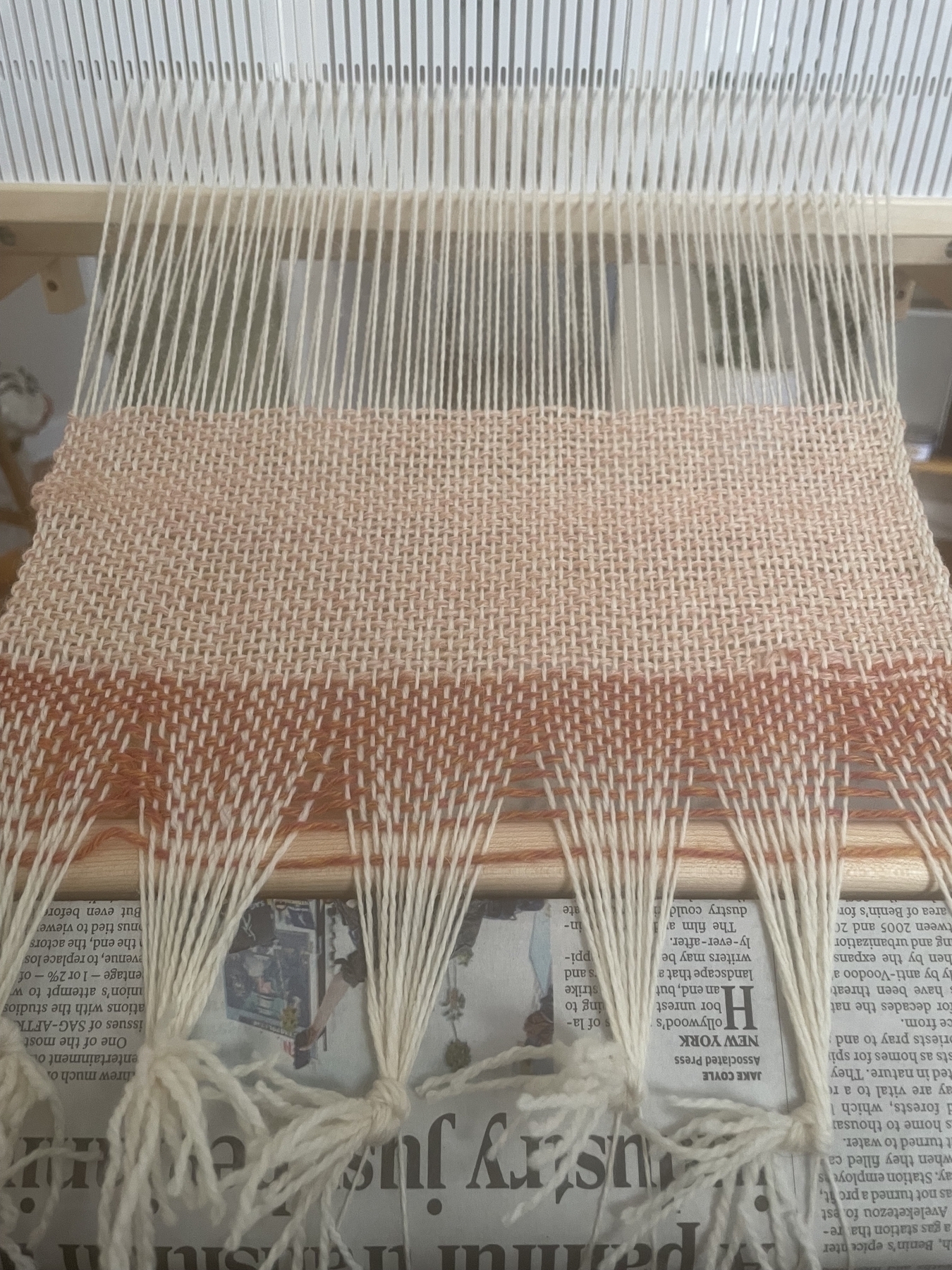
I immediately took that money and bought a rigid hettle loom. I had recently taken a class and loved it, and also needed a new way to use up some of my growing yarn stash.*
I’ve had the loom in a box since this summer and finally got it put together this week.
It took me a book, several hours and Youtube videos to properly dress the loom, and I got it mostly put together - with some tension issues, but good enough to start weaving - last night. I would guess I’ve had the yarn I put on it for twenty years, and it feels good to finally put it to use while I get started.
I’m still debating what to do for this year’s show. I want to do a Dril quote, but I’m also thinking of something more commercial. 🧶
This sausage and cornbread dressing is one of my favorite recipes, a dish present on every Thanksgiving, Christmas, and Easter table at my childhood home. The original recipe lives in a non-descript church cookbook from somewhere in the Middle South from the 1970s, and another iteration lives in an email from 2008, which is terribly inconvenient. I decided to record it here for posterity, with some of my own notes added. 🍞
This savory cornbread stuffing hits all the taste centers in your primitive lizard brain, with fats and carbs and meats galore. For the cornbread, make any recipe you’d like as long as it’s a full 10” unsweetened round. I make mine in a cast-iron skillet. And if you don’t feel like making your own Creole seasoning, get a tin of Tony Chachere’s spice mix or just bite the bullet and use as many fresh herbs as possible.
Ingredients
1 pound Chicken Gizzards (optional)
1/2 pound Ground Lean Pork
1/2 pound Ground Beef
8 T Butter
4 Whole Chopped Onions
4 Whole Chopped Celery Ribs
2-6 Garlic cloves minced
32 oz Chicken Broth
3 T Creole Seasoning
4 cup Corn Bread (unsweetened)
1/2 cup Chopped Green Onion
In a Dutch oven, deep fry meats in butter until browned.
Add onions, celery, and garlic to the meat and butter mixture and cook until tender.
Add broth and season with creole seasoning.
Bring to a boil, simmer for 1 hour.
Break the cornbread into 4-5 large pieces with your hands. Add corn bread to pot in large pieces, breaking it up with the side of a large spoon, until all of it is added. Add chopped green onions for color and stir until cornbread is moist and coated with broth dressing.
Adjust seasoning to taste.
Notes
If you’re not a gizzards person, leave this out and adjust the beef and pork to 1 lb. each, or sub with andouille sausage.
For the cornbread, make any recipe you’d like as long as it’s a full unsweetened round. I make mine in a cast-iron skillet.
The creole seasoning can be stored in an airtight container, but if you don’t feel like making your own, get a tin of Tony Chachere’s from the seasoning section at the grocery store. I generally add fresh herbs that I have on hand, and it’s lovely with fresh sage and rosemary.
Created some artsy fartsy rules for myself where I have to finish something old before I start something new, just to keep some momentum going on existing projects.
I have several outstanding embroidery, quilting, knitting AND crochet projects, and a loom I refuse to assemble until I knock out one or two of these other ones. My two biggest priorities are a giant garter stitch shawl that I began pre-pandemic and really want to finish because it’s so beautiful - and so boring to knit - and a gigantic crochet mosaic blanket that is teaching me the ins and outs of crochet. After that, some half-hearted quilt pieces, a wholecloth quilt and two flimsies that need to be quilted and bound. And some lingering embroidery projects and a head full of new ideas. My friend gave me some antique glass she’d like me to engrave this winter.
Meanwhile I finished a hat for the kiddo last night and she was so pumped she wore it to school this morning. 🧶
Hilariously (sadly? regretfully?), since I’ve been writing online for public audiences since about 1997, I’ve been thinking about the art of posting, community building, and who benefits and how, for a very long time. All of this (https://blog.ayjay.org/the-three-paths-of-micro-blog/) sounds about right, specifically:
“…it will — by design — never be a place for you to monetize your brand, troll, shitpost, or become an influencer. But hey, there are plenty of other platforms better suited for that kind of thing. Micro.blog is better suited for the more human and humane paths I have identified here.”
“For years after the American Revolution, the public opposed the creation of police departments, fearing that they would become forces of repression.
“Only in the mid-nineteenth century, after the growth of industrial cities and a rash of urban riots—after dread of the so-called dangerous classes surpassed dread of the state—did police departments emerge in the United States.”